
Remote Local SEO is the process of ranking a business in Google Maps and local search results using digital location signals, customer data, and search behaviour rather than physical proximity to an SEO agency. By optimising Google Business Profiles, local keywords, reviews, and website content, businesses can appear in their city’s top search results even when their SEO team operates remotely.
For small businesses, Remote Local SEO works because Google evaluates relevance, prominence, and customer engagement not where the agency is located. Using AI powered tracking, reputation monitoring, and location based optimisation, remote SEO specialists can improve visibility, attract local customers, and outperform nearby competitors while delivering faster insights and more scalable results.
What Is Remote Local SEO
Remote Local SEO is the process of improving a business’s visibility in Google Maps and local search results using online optimisation techniques rather than physical location. It focuses on optimising digital signals such as Google Business Profiles, reviews, local keywords, and website content so a business can rank in its city even when its SEO agency works remotely. Many brands now use this model through Remote Local SEO service providers.
It focuses on ranking your business for:
- Google Maps
- “Near me” searches
- City-based keywords
- Local service queries
Even if your SEO team is in another country, Google does not rank businesses based on where the agency is located. Google ranks businesses based on signals about the business itself.
These signals include:
- Your Google Business Profile
- Reviews
- Website content
- Citations
- Authority
- Customer engagement
- Search behaviour
Remote SEO teams simply manage and optimise these digital signals.
How Google Decides Which Local Businesses Rank
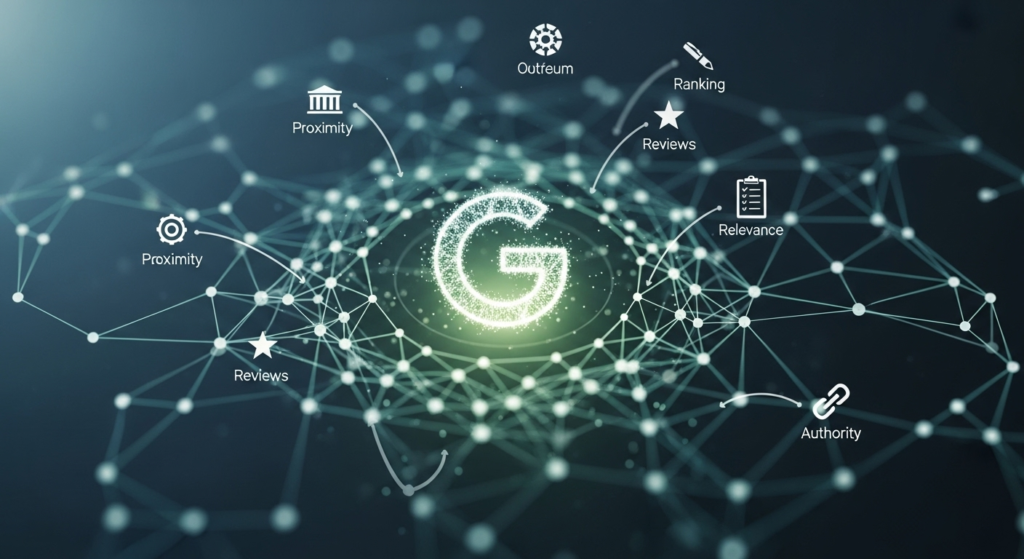
Google ranks local businesses based on three main factors: relevance, proximity, and prominence. Relevance measures how well a business matches a search, proximity looks at how close the business is to the user, and prominence evaluates how trusted and well known the business is online through reviews, mentions, and engagement.
Google looks at three main local ranking factors:
1. Relevance
Relevance measures how well a business matches what a user is searching for. Google checks your business categories, services, and website content to see if they align with the search query. The more accurately your information matches the user’s intent, the higher your chances of ranking.
2. Proximity
Proximity refers to how physically close a business is to the person searching on Google. Google uses the user’s location data to show nearby businesses that can serve them quickly. Even if a business is slightly farther away, strong relevance and prominence can still help it rank well.
3. Prominence
Prominence shows how well known and trusted a business is online. Google looks at reviews, ratings, backlinks, brand mentions, and overall online activity. Businesses with stronger reputation signals are more likely to rank higher in local search results.
Google Local Ranking Factors
| Factor | What Google Measures | How Remote SEO Optimises It |
|---|---|---|
| Relevance | How well your profile matches search intent | Keyword optimisation, service pages, categories |
| Proximity | Distance from searcher | Set by your address |
| Prominence | Reviews, links, mentions, engagement | Content, reviews, brand signals, authority building |
Why the SEO Agencys Location Doesn’t Matter
Google does not care:
- Where your SEO company is
- What country they are in
- Where they log in from
Google only cares about:
- Your business data
- Your reputation
- Your visibility signals
A remote SEO agency can:
- Edit your Google Business Profile
- Manage reviews
- Publish local pages
- Build citations
- Track rankings
- Monitor competitors
- Analyse customer behaviour
All of this happens online.
In fact, remote agencies often perform better because they use:
- Advanced tools
- AI-driven tracking
- Large datasets
- Experience from multiple markets
What a Remote Local SEO Agency Actually Does

A remote local SEO agency manages a business’s Google Business Profile, website, reviews, local citations, and online reputation to improve local search visibility. They ensure business information is accurate, create location focused content, track rankings, and optimise customer engagement signals to help the business appear higher in search results. This workflow is similar to how human reviewers validate AI data quality
Here’s what they control:
Google Business Profile
- Categories
- Descriptions
- Services
- Photos
- Q&A
- Posts
- Maps placement
Website Optimisation
- City pages
- Service pages
- Schema markup
- Local keywords
- Conversion paths
Reputation Management
- Review monitoring
- Review growth
- Review responses
- Sentiment tracking
Local Authority
- Business listings
- Citations
- Press mentions
- Local backlinks
Behaviour Signals
- Click-through rate
- Calls
- Directions
- Website visits
All of these are measurable, trackable, and manageable remotely.
How AI Makes Remote Local SEO Stronger
AI strengthens Remote Local SEO by analysing search behaviour, tracking rankings in real time, monitoring reviews, detecting competitor movements, and identifying new keyword opportunities. This allows agencies to react faster, optimise smarter, and keep businesses ahead in local search without manual guesswork.
AI helps remote agencies:
- Detect ranking drops instantly
- Spot negative reviews early
- Identify competitor attacks
- Discover keyword shifts
- Track consumer sentiment
Traditional Local SEO vs AI First Remote SEO
| Feature | Traditional Agency | AI-First Remote Agency |
|---|---|---|
| Rank tracking | Weekly manual checks | Real time tracking |
| Review monitoring | Manual | Automated alerts |
| Keyword discovery | Guesswork | AI intent analysis |
| Competitor tracking | Limited | Automated |
| Content optimisation | Static | Continuous AI updates |
How Small Businesses Benefit From Remote Local SEO
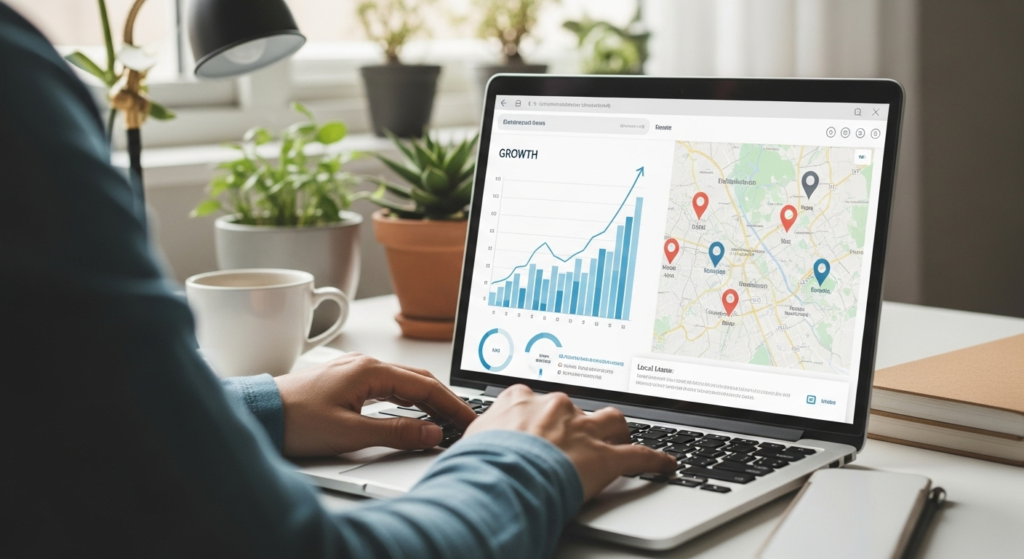
Small businesses benefit from Remote Local SEO because it gives them access to advanced tools, expert strategies, and cost-effective optimisation without hiring expensive local agencies. It helps them rank higher, attract more local customers, and compete with larger brands in their area.
Remote SEO helps small businesses by:
- Lowering cost (no office overhead)
- Access to advanced tools
- Multi-city experience
- Faster scaling
- Better reporting
A plumber in Dallas, a dentist in London, or a restaurant in Singapore all use the same Google algorithm.
The rules are digital, not geographic.
Real World Examples
Local Plumber
A plumber in Toronto hires a remote SEO team in another country.
They:
- Optimise his Google Business Profile
- Build location pages
- Increase reviews
- Add service keywords
Result:
He ranks in the top 3 Google Maps results and gets more calls.
Restaurant
A small restaurant in Singapore hires a remote SEO agency.
They:
- Optimise menu keywords
- Improve reviews
- Add food photos
- Use local search terms
Result:
They start appearing when tourists search “best local food near me.”
What Can Go Wrong With Bad Remote SEO
Poor remote SEO can lead to problems like fake reviews, incorrect business listings, spammy backlinks, or Google Business Profile suspensions. These issues can damage rankings and trust, which is why it is important to work with ethical and experienced SEO professionals.
Poor agencies may:
- Use fake reviews
- Create spammy listings
- Use wrong addresses
- Build toxic backlinks
This can get your business:
- Suspended from Google Maps
- Removed from search
- Flagged as spam
That’s why choosing the right agency matters.
How to Choose a Trustworthy Remote Local SEO Agency
A reliable remote SEO agency should use transparent methods, follow Google guidelines, provide clear reporting, and have proven experience with local rankings. Businesses should avoid agencies that promise instant results or use questionable tactics that risk long term penalties.
How to Evaluate a Remote SEO Agency
| What to Check | Why It Matters |
|---|---|
| Transparent process | Avoids black-hat tactics |
| Review management policy | Protects your Google profile |
| Real client examples | Shows experience |
| AI & data tools | Improves accuracy |
| Clear reporting | Builds trust |
Avoid agencies that promise:
- Instant rankings
- Thousands of reviews
- Guaranteed #1
Google doesn’t work that way.
How Long Does Remote Local SEO Take
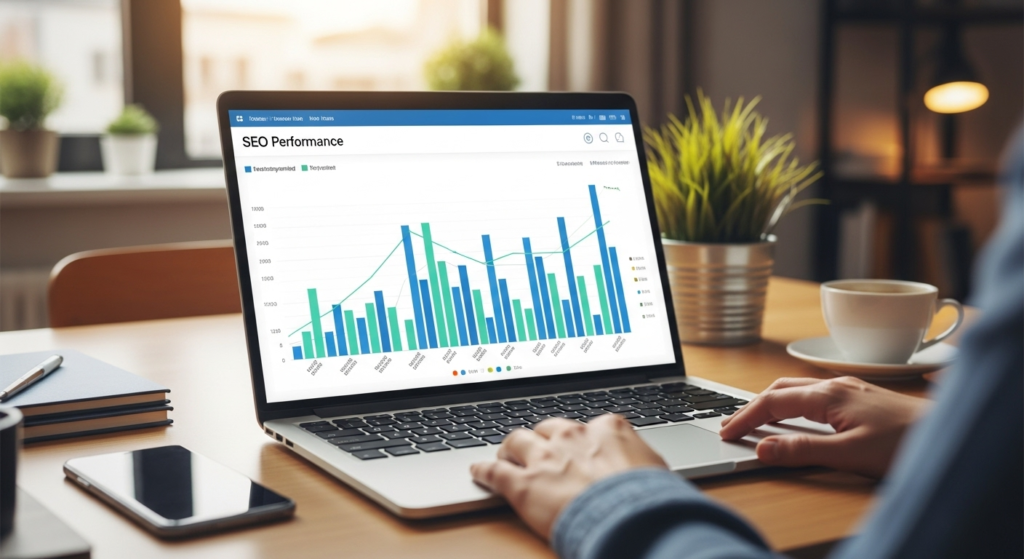
Remote Local SEO typically takes between 30 to 90 days to start showing visible improvements, depending on competition, your current online presence, and how optimised your Google Business Profile and website are. Small businesses with low competition may see faster results, while crowded markets can take a few months to stabilise and grow. As reviews increase, local content improves, and engagement signals strengthen, rankings on Google Maps and local search continue to rise steadily over time.
Most businesses see:
- Initial movement in 30–45 days
- Strong improvements in 90 days
- Dominance in 4–6 months
This depends on:
- Competition
- Market
- Starting position
- Review count
- Website quality
Why Remote Local SEO Is the Future
Remote Local SEO is the future because Google relies on digital data, not physical location, to rank businesses. As AI, voice search, and online reputation become more important, businesses that manage their local presence through data driven remote SEO will achieve stronger, more scalable growth. As AI, reputation systems, and behavioural signals grow, Remote Local SEO will dominate just like AI driven evaluation careers are now replacing traditional review jobs
Remote SEO allows:
- 24/7 monitoring
- Multi-market intelligence
- Faster adaptation
- Better protection
Conclusion
Remote Local SEO works because Google ranks businesses based on digital trust signals, not the physical location of the SEO agency. By optimising Google Business Profiles, local content, reviews, and engagement data, remote SEO teams can help small businesses appear in top local search results, even in competitive markets. This allows small companies to compete with larger brands without needing expensive, city based agencies.
For small businesses, Remote Local SEO offers a smarter, more scalable approach to growth. With AI powered tracking, reputation management, and data driven optimisation, remote agencies can deliver faster insights, better rankings, and stronger customer trust. When done correctly, it gives businesses full control over their local visibility while keeping costs lower and results more consistent.
FAQs
1. Does Remote Local SEO really work for small businesses?
Yes. Google uses online signals like reviews, relevance, and website quality to rank local businesses, which remote SEO agencies can optimise effectively.
2. Can a remote agency manage my Google Business Profile?
Yes. A remote team can fully manage, optimise, and monitor your profile, including posts, reviews, and local ranking performance.
3. Is Remote Local SEO safe for my business?
It is safe when done using Google compliant strategies such as ethical review management, accurate listings, and high quality content.
4. How long does Remote Local SEO take to show results?
Most businesses begin seeing improvements within 30 90 days, depending on competition and current visibility.
5. Why choose Remote Local SEO over a local agency?
Remote agencies often use advanced AI tools, have broader market experience, and provide better data driven optimisation at a lower cost.
6. Will Remote Local SEO help me rank on Google Maps?
Yes. Optimising your Google Business Profile, reviews, and local signals improves visibility on Google Maps and local search results.