
The rise of digital technology has completely changed how people work, learn, and earn. Today, you don’t need a college degree to build a successful career what truly matters are your skills, creativity, and consistency. From virtual assistance to content creation, the online world offers countless legitimate opportunities for people who want flexibility, independence, and financial stability. Millions are now leaving traditional 9-to-5 office jobs to pursue remote careers that give them more control over their time and income.
In 2025, the demand for remote jobs without degree requirements has skyrocketed as companies increasingly focus on results rather than formal education. Businesses are hiring freelancers, remote workers, and independent contractors from around the world to fill roles in writing, design, customer service, and digital marketing. Whether you’re looking to earn extra income or start a full-time online career, there are real, skill-based opportunities available even if you’re just starting from home
1. Virtual Assistant
Virtual assistants (VAs) help businesses handle administrative tasks remotely such as scheduling, email management, data entry, and customer coordination. You don’t need a degree, just excellent organization and communication skills.
Why it’s great: It’s one of the easiest entry points into online work, and you can grow into higher-paying executive assistant or operations roles.
Typical pay: $15–$30/hour
Platforms: Belay, Upwork, Time Etc
2. Social Media Manager
If you’re active on platforms like Instagram, TikTok, or LinkedIn, you can build a career as a social media manager. Brands need people who can create content, engage with followers, and track analytics.
Skills required: Creativity, copywriting, and understanding of social trends.
Tip: Start by managing your own or a small business’s account to build a portfolio.
Typical pay: $20–$50/hour
Platforms: Fiverr, Indeed, Remote.co
3. Freelance Writer
Writing for blogs, websites, and online publications is one of the best remote jobs without degree barriers. If you can write clearly and tell stories, you can earn as a content writer, copywriter, or ghostwriter.
Skills required: Grammar, SEO basics, and research.
Pro tip: Start on platforms like Medium or Substack to showcase your work.
Typical pay: $0.05–$0.25 per word
4. Customer Support Representative
Many global companies hire remote customer support reps to answer calls, respond to emails, and handle live chats. Most provide paid training, making it beginner-friendly.
Skills required: Patience, problem-solving, and communication.
Why it’s great: Stable income and often full-time benefits.
Typical pay: $14–$25/hour
Platforms: Amazon Jobs, Apple At Home, Remote OK
5. Data Entry Specialist
Data entry is one of the simplest online jobs you can do with minimal experience. You’ll input, update, or verify data in spreadsheets or software systems.
Skills required: Accuracy, typing speed, and attention to detail.
Tip: Avoid “get-rich-quick” scams — only work with verified employers.
Typical pay: $12–$20/hour
6. Online Tutor
If you’re skilled in a subject like English, math, or science, you can work as an online tutor or ESL (English as a Second Language) teacher. Many platforms don’t require a formal degree, just a good grasp of the subject.
Skills required: Teaching ability and clear communication.
Platforms: Preply, Cambly, Tutor.com
Typical pay: $15–$40/hour
7. Transcriptionist
A transcriptionist converts audio or video files into text. This is a flexible, quiet remote job that suits fast typists and detail-oriented people.
Skills required: Excellent listening and language accuracy.
Tip: Take free typing tests to boost your speed.
Typical pay: $10–$30/hour
Platforms: Rev, TranscribeMe, GoTranscript
8. Graphic Designer
Even without a degree, you can become a freelance graphic designer if you know tools like Canva, Figma, or Adobe Photoshop. Design logos, social media posts, and marketing materials for businesses.
Skills required: Creativity and visual design sense.
Pro tip: Build a free portfolio using Behance or Dribbble.
Typical pay: $25–$75/hour
9. SEO Specialist
Search Engine Optimization (SEO) helps websites rank on Google — and it’s a skill you can learn online. As an SEO specialist, you’ll optimize websites, research keywords, and track analytics.
Why it’s high-demand: Every business wants visibility online.
Skills required: Keyword research, analytics, and copy optimization.
Typical pay: $20–$60/hour
Platforms: LinkedIn, Indeed, SEOjobs
10. Content Creator / YouTuber
If you’re confident on camera or enjoy storytelling, you can start a YouTube channel or create content on TikTok or Instagram. Many successful creators started with just a phone and an idea no degree needed.
Earning sources: Ads, sponsorships, affiliate links, and digital products.
Tip: Consistency matters more than perfection.
Typical pay: Highly variable — $100–$10,000+ per month
11. Proofreader or Editor
Love grammar and spotting typos? You can work as a remote proofreader for blogs, publishers, and academic firms. It’s a flexible role ideal for writers and language enthusiasts.
Skills required: Strong grammar, vocabulary, and attention to detail.
Tools to use: Grammarly, Hemingway, ProWritingAid.
Typical pay: $20–$45/hour
12. Online Reseller or Dropshipper
Turn your interest in products into profit by becoming an online reseller or dropshipper. You can sell through Etsy, eBay, or Shopify without holding inventory.
Skills required: Product research, marketing, and customer service.
Tip: Focus on a niche (e.g., eco-friendly items, print-on-demand shirts).
Earnings: $500–$5,000+ per month (depending on volume)
13. Remote Recruiter
Companies hire remote recruiters to find and screen job candidates. You’ll coordinate interviews and assess resumes — no degree needed, just good people skills.
Skills required: Communication, negotiation, and understanding job roles.
Platforms: ZipRecruiter, Indeed, LinkedIn
Typical pay: $40,000–$70,000 per year
14. Website Tester
A website tester reviews websites or apps and gives usability feedback. You’re paid to test functionality and user experience — no coding or degree required.
Skills required: Clear communication and attention to detail.
Platforms: UserTesting, TryMyUI, Testbirds
Typical pay: $10–$25 per test
15. Remote Evaluator or Search Engine Rater
Companies like Appen, Telus International, and Google hire remote evaluators to rate search results, ads, and online content quality. It’s a legit, flexible role for analytical thinkers.
Skills required: Internet research, comprehension, and attention to detail.
Why it’s great: Work from anywhere, flexible hours, and consistent income.
Typical pay: $12–$20/hour
Quick Comparison Table: Top Remote Jobs Without a Degree
| Job Title | Average Pay | Experience Needed | Flexibility Level |
|---|---|---|---|
| Virtual Assistant | $15–$30/hr | Beginner | High |
| Social Media Manager | $20–$50/hr | Moderate | High |
| Freelance Writer | $0.05–$0.25/word | Beginner | High |
| Customer Support Rep | $14–$25/hr | Beginner | Medium |
| SEO Specialist | $20–$60/hr | Intermediate | High |
| Graphic Designer | $25–$75/hr | Moderate | High |
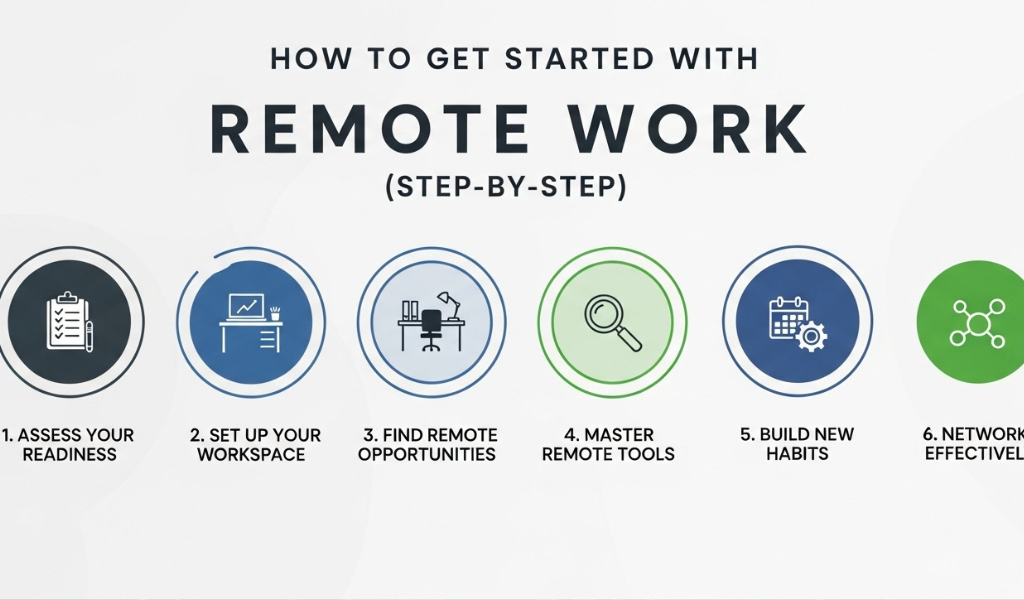
How to Get Started with Remote Work (Step-by-Step)
1. Identify your skills
Definition: List the abilities you already have that employers pay for both hard (technical) and soft (people) skills.
Mini-tasks:
- Write 10 things you can do well (e.g., copywriting, Excel, customer service, video editing).
- For each, note evidence (projects, school work, volunteer experience).
- Rank them by enjoyment + market demand (pick top 3).
Tools/examples: Skill inventory spreadsheet, LinkedIn skill assessments, a short self-assessment quiz.
Outcome: A prioritized skills list you can market.
2. Choose your niche
Definition: Pick a specific role or industry where your top skills match demand (e.g., “social media for small cafés” rather than just “social media”).
Mini-tasks:
- Research 5 common remote roles that use your top skills.
- Validate demand: search 10 job listings to see requirements and pay.
- Pick 1 primary and 1 backup niche.
Why it matters: Niches help you stand out, set pricing, and write focused applications.
Outcome: A clear job target (e.g., “freelance content writer for SaaS blogs”).
3. Build your portfolio
Definition: Create tangible examples that show you can do the job real or mock work that proves results.
Mini-tasks:
- Make 3–5 sample pieces (articles, design mockups, spreadsheets, tutor lesson plans).
- Turn past work (even personal or volunteer projects) into case studies: problem → action → result.
- Host portfolio: simple website (Wix/Squarespace), Behance (design), or a Google Drive folder with shareable links.
Tools/examples: Canva, WordPress, GitHub (for dev), Medium/Substack (for writers).
Outcome: A public portfolio link you can include in applications.
4. Set up profiles & presence
Definition: Create and optimize accounts where employers search and hire remote talent.
Mini-tasks:
- Create/optimize LinkedIn: headline with niche (e.g., “Remote SEO Writer for e-commerce”), clean photo, 3–5 skills, short summary.
- Sign up for 2 freelancing/job platforms (Upwork, Fiverr, Remote.co, Indeed) and complete profiles.
- Add portfolio links and 2–3 sample descriptions tailored to each platform.
Tips: Use a professional photo, write one-line value propositions, and include keywords from job ads.
Outcome: 3+ live profiles ready for applications.
5. Apply & pitch (first outreach strategy)
Definition: Start sending tailored applications and short pitches quality beats quantity.
Mini-tasks:
- Create 3 pitch templates (cold outreach, platform proposal, LinkedIn message) and personalize them.
- Apply to 5–10 jobs per day focusing on fit, not just volume.
- Track applications in a simple spreadsheet (date, role, platform, status).
What to include in a pitch: one-line result you deliver, 1–2 relevant portfolio links, clear call to action (e.g., “Can we do a 15-minute call?”).
Outcome: A repeatable, trackable outreach process.
6. Keep learning & upskill
Definition: Strengthen the specific skills that employers ask for in your niche.
Mini-tasks:
- Pick 1 relevant free course (Coursera, Google Skillshop, HubSpot) and finish one module per week.
- Read 2 industry articles per week and add key takeaways to your notes.
- Practice on real projects (volunteer, micro-gigs, or personal projects).
Why it matters: Employers hire people who can solve current problems; continuous learning keeps you competitive.
Outcome: Updated skills and new portfolio pieces you can show.
7. Price yourself & create packages
Definition: Decide how you’ll charge (hourly, per-project, retainer) and create clear service packages.
Mini-tasks:
- Research market rates for your niche and location.
- Draft 2–3 packages (e.g., Basic, Standard, Premium) with deliverables and price.
- Prepare a short pricing FAQ to handle negotiation.
Tip: Offer an introductory/project-first discount to get your first reviews.
Outcome: Clear pricing that makes selling easier.
8. Build repeatable systems (workflow)
Definition: Create processes for onboarding clients, delivering work, invoicing, and communication.
Mini-tasks:
- Write 1 onboarding email template and 1 project brief template.
- Choose tools: Google Calendar, Trello/ClickUp, Toggl for time, PayPal/Stripe for payment.
- Define delivery milestones and expected response times.
Why it matters: Systems improve reliability and let you scale.
Outcome: A documented workflow you can reuse.
9. Gather testimonials & refine
Definition: After completing work, collect short client feedback to build trust.
Mini-tasks:
- Ask for a 1–2 sentence testimonial and permission to publish.
- Add testimonials to your portfolio and profiles.
- Track metrics (e.g., “increased blog traffic by 20%”) to turn into stronger case studies.
Outcome: Social proof that increases conversion.
10. Be consistent & iterate
Definition: Treat building remote work like a small business consistent effort and small improvements win.
Mini-tasks:
- Set weekly goals (apply to X jobs, produce X pieces of content).
- Review results every 2 weeks: what worked, what didn’t.
- Iterate on pitches, pricing, and the niche if needed.
Outcome: Steady growth and a clearer path to steady clients.
Common Myths About Remote Jobs Without a Degree

Myth 1: You can’t earn well without a degree.
→ Many freelancers and remote workers earn more than traditional office jobs once they build experience.
Myth 2: All remote jobs are scams.
→ There are scams online, but verified platforms like Remote.co, Indeed, and Appen list legitimate roles.
Myth 3: You need advanced tech skills.
→ Most beginner-friendly jobs only need communication, organization, or writing skills.
Why Remote Jobs Without Degrees Are Growing Fast

The demand for remote jobs without degrees is rising as companies increasingly prioritize skills and performance over academic qualifications. With technology enabling seamless online collaboration, employers can now access a diverse global talent pool. Many roles from customer support to digital marketing require hands-on abilities that can be learned through online courses, tutorials, and real-world experience rather than formal education.
At the same time, more people are seeking flexible and independent careers that fit their lifestyle. Remote work offers that freedom, allowing professionals to earn from anywhere while balancing personal and professional goals. This shift has made skill-based hiring the new normal, opening the door for capable workers to thrive without needing a traditional degree.
Expert Tips to Succeed in Remote Work

1. Create a Dedicated Workspace
Set up a quiet, organized space where you can focus without distractions. Having a consistent work area helps your mind stay productive and separates your personal and professional life.
2. Stick to a Schedule
Remote work gives flexibility, but structure is key. Set clear working hours, take short breaks, and plan tasks daily to stay consistent and meet deadlines.
3. Communicate Clearly and Often
Strong communication builds trust in remote teams. Use tools like Slack, Zoom, or Microsoft Teams to stay connected, share updates, and clarify expectations regularly.
4. Keep Learning and Upskilling
Remote work trends evolve quickly, so invest time in online courses or certifications. Learning new digital skills increases your value and opens more career opportunities.
5. Stay Self-Motivated
Without an office environment, motivation can fade. Set small daily goals, celebrate achievements, and remind yourself why you chose remote work to stay inspired.
6. Use the Right Tools
Productivity tools like Trello, Notion, and Google Workspace help you organize tasks, track progress, and manage projects efficiently from anywhere.
7. Maintain Work-Life Balance
Avoid burnout by setting boundaries log off after work hours, take regular breaks, and spend time on hobbies or with loved ones to recharge.
Conclusion
The modern job market is evolving faster than ever, and traditional degrees are no longer the only path to success. What truly matters today is your ability to adapt, learn, and deliver results. With so many online platforms and digital tools available, anyone can start earning from home using skills they already have whether it’s writing, designing, organizing, or communicating. These opportunities give you freedom, flexibility, and control over your work-life balance, something most office jobs can’t offer.
If you’ve been waiting for the “right time” to start, that time is now. The rise of remote jobs without degree barriers proves that success is about action, not academic credentials. Begin by identifying your strengths, building a small portfolio, and applying consistently. Every expert remote worker once started as a beginner and with persistence, you can create a sustainable, independent career that fits your lifestyle and goals.
FAQs
1. What are the best remote jobs without a degree in 2025?
Some of the best options include virtual assistant, freelance writer, social media manager, and graphic designer. These roles value skills and creativity over formal education, making them ideal for beginners in remote work.
2. How can I find legit remote jobs without a degree?
You can find real opportunities on trusted platforms like Remote.co, LinkedIn, and Indeed. Always research the company, avoid paying upfront fees, and check for verified job postings to stay safe from scams.
3. Do remote jobs without a degree pay well?
Yes. Many remote roles offer $20–$50 per hour depending on your experience and niche. With consistent work and skill-building, freelancers and remote workers can easily earn a full-time income from home.
4. What skills do I need for remote work without a degree?
Strong communication, time management, and problem-solving are key. Depending on the role, you may also need writing, design, customer service, or marketing skills all of which can be learned online for free.
5. Can I work for international companies without a degree?
Absolutely. Many global employers, including Appen, Telus International, and Amazon, hire remote workers based on skills rather than education. As long as you meet job requirements, you can work from anywhere in the world.