

AI models are computational systems trained on large datasets to recognise patterns, make predictions, and generate responses without explicit programming for every task. They power modern technologies such as chatbots, search engines, recommendation systems, image recognition, and automated decision making by learning from examples rather than fixed rules.
Despite rapid advancement, AI models still rely on human oversight to remain accurate, reliable, and unbiased. Training data limitations, contextual gaps, and hallucinations mean human review, feedback, and evaluation play a critical role in improving model performance. This human in the loop approach ensures AI models deliver trustworthy results in real world applications, which is why they remain central to responsible AI development today.
What Are Human Reviewers in AI
Human reviewers are individuals who evaluate and review AI outputs to ensure they meet quality, accuracy, and safety standards. They review responses, label data, and provide feedback that helps AI systems align with real-world expectations.
By applying human judgment, reviewers help AI systems avoid errors that automated checks often miss. Their involvement ensures AI outputs remain useful, ethical, and relevant across different use cases and industries.
1. AI Models Cannot Fully Understand Context
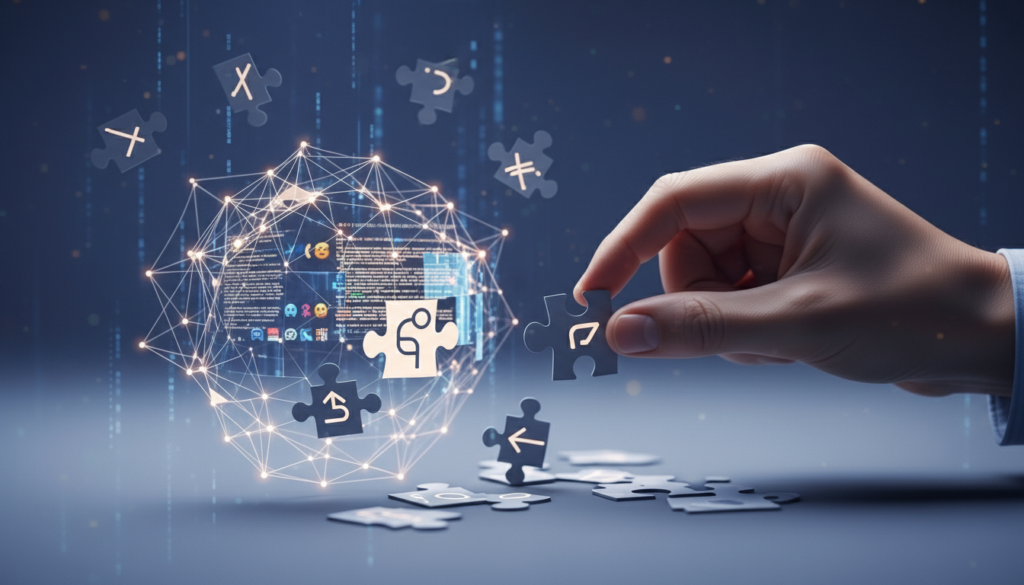
AI models generate responses based on patterns found in data rather than true understanding. They often struggle with intent, emotional tone, and situational context, especially in complex or sensitive scenarios.
Human reviewers recognise meaning beyond words, helping AI respond appropriately. This ensures outputs match user intent and avoid misunderstandings caused by missing contextual awareness. For example, the same sentence can have different meanings depending on tone, culture, or timing. AI may interpret it literally, while a human reviewer can understand the underlying intent.
Human reviewers ensure that AI outputs:
- Match the user’s real intent
- Respond appropriately to sensitive situations
- Avoid misinterpretation caused by missing context
Without human review, AI responses can feel accurate on the surface but be contextually wrong.
2. Human Reviewers Detect Bias Hidden in Training Data
AI models learn from large datasets that often include historical bias and uneven representation. Without correction, these biases can appear in AI outputs and affect fairness.
Human reviewers identify and flag biased responses, allowing systems to improve over time. Their oversight is essential for building AI that treats users fairly and responsibly.
Human reviewers play a key role in:
- Identifying biased responses
- Flagging unfair assumptions
- Correcting discriminatory outputs
- Improving dataset balance over time
This human oversight is essential for building AI systems that are fair and trustworthy.
3. AI Models Still Produce Hallucinations
AI hallucinations occur when models generate information that sounds accurate but is factually incorrect. These errors can mislead users, especially in high-risk fields.
Human reviewers verify facts and correct false information before it reaches users. This review process reduces misinformation and improves trust in AI systems.
AI can confidently:
- Invent sources
- Misstate facts
- Provide outdated or incorrect information
Human reviewers are needed to:
- Verify factual accuracy
- Identify fabricated details
- Prevent the spread of misinformation
In areas such as healthcare, finance, or legal information, hallucinations can have serious consequences. Human review reduces this risk significantly.
4. Ethical Decisions Require Human Judgment
Ethical reasoning involves values, responsibility, and social impact, which AI models cannot fully understand. Automated systems lack moral awareness.
Human reviewers ensure AI decisions align with ethical standards and legal requirements. This ethical oversight is a key part of AI evaluator responsibilities in real world systems.
When AI systems are used for:
- Content moderation
- Hiring recommendations
- Credit scoring
- Healthcare advice
Human reviewers ensure decisions align with ethical standards, legal requirements, and societal values. They provide oversight where automation alone is not sufficient.
Human judgment helps prevent:
- Harmful recommendations
- Inappropriate content approvals
- Unethical decision-making by automated systems
5. Language Nuance and Cultural Meaning Need Human Insight

Language varies across regions, cultures, and social contexts. AI models often struggle with sarcasm, idioms, and culturally sensitive expressions.
Human reviewers understand these nuances and guide AI to produce respectful and appropriate responses. This ensures communication remains accurate across diverse audiences. AI models may struggle with:
- Idioms
- Sarcasm
- Regional expressions
- Cultural sensitivities
A phrase that is acceptable in one region may be offensive in another. AI often lacks the cultural awareness to make this distinction.
Human reviewers understand:
- Local language usage
- Cultural boundaries
- Social norms
Their involvement ensures AI outputs remain appropriate and respectful across different audiences.
6. Edge Cases Break Automated Models
AI models perform best in common scenarios but often fail in unusual or unexpected situations. These edge cases fall outside typical training patterns.
Human reviewers evaluate these rare situations and provide corrective feedback. This improves model reliability and prepares AI for real world complexity.
Examples include:
- Ambiguous queries
- Mixed-language inputs
- Unclear instructions
- Unexpected user behaviour
Human reviewers help identify and correct these edge cases by:
- Evaluating unusual outputs
- Providing corrective feedback
- Expanding training coverage
This improves model robustness and real-world reliability.
7. AI Cannot Self Validate Its Own Accuracy
AI models cannot assess whether their own responses are correct or useful. They lack self-awareness and accountability.
Human reviewers act as a quality control layer, validating accuracy and usefulness. This ensures AI outputs meet established standards before deployment.
Human reviewers act as a quality control layer by:
- Rating response quality
- Comparing outputs against guidelines
- Flagging incorrect or low-value answers
This validation process ensures AI systems meet defined quality standards before deployment or scaling.
8. Human Feedback Improves AI Training Over Time
AI improvement depends on continuous feedback rather than automation alone. Without guidance, model performance can decline or stagnate.
Human reviewers provide structured feedback that helps models learn better responses. This process drives long-term improvement and consistency.
Human reviewers provide:
- Reinforcement signals
- Correct examples
- Preference rankings
- Error annotations
This feedback helps models learn what “good” looks like and continuously improve performance. Without consistent human input, AI models stagnate or drift in quality.
9. Real World Testing Requires Human Evaluation
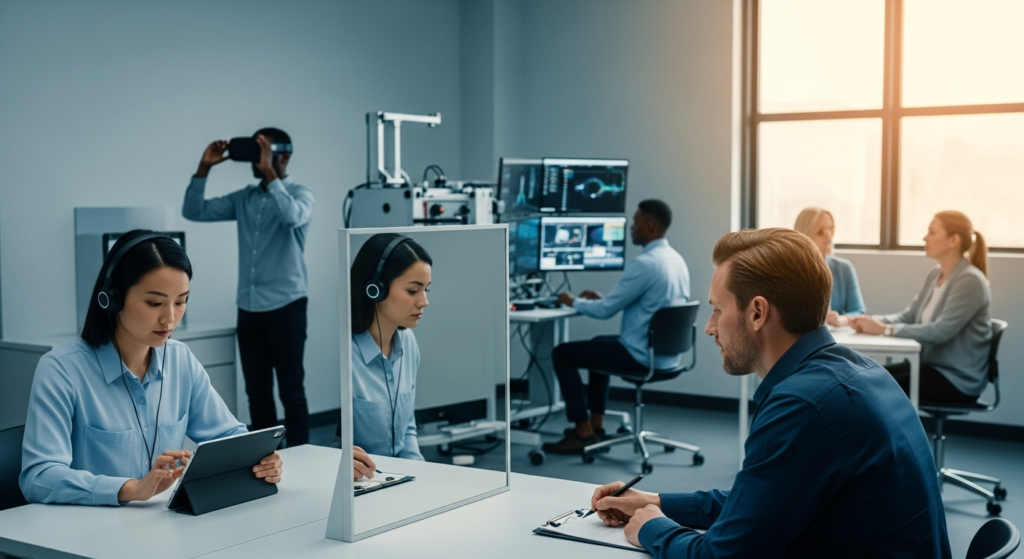
AI behaves differently in real world use compared to controlled testing environments. User behaviour and unexpected inputs can expose weaknesses.
Human reviewers evaluate real world performance and identify issues early. At Remote Online Evaluator, structured human review processes help assess AI outputs through human validation of AI models in real world conditions.
Human reviewers evaluate:
- User satisfaction
- Practical usefulness
- Clarity of responses
- Safety in real-world usage
This real-world evaluation helps identify issues that automated testing often misses.
At Remote Online Evaluator, structured human review processes help assess AI outputs in real-world conditions, ensuring systems remain accurate, safe, and aligned with user needs.
10. Continuous AI Improvement Depends on Human Reviewers
AI systems require ongoing monitoring to remain effective as data and use cases evolve. Performance can drift without regular evaluation.
Human reviewers enable continuous improvement by refining outputs and guiding updates. Their role becomes more important as AI systems scale.
Human reviewers enable:
- Continuous quality assurance
- Model retraining feedback
- Detection of performance drift
- Adaptation to new use cases
As AI systems scale, the role of human reviewers becomes more important, not less.
AI vs Human Review
| Area | AI-Only Evaluation | Human Review |
|---|---|---|
| Context understanding | Limited | Strong |
| Bias detection | Weak | Reliable |
| Ethical judgment | Not possible | Essential |
| Hallucination control | Inconsistent | Effective |
| Cultural sensitivity | Low | High |
| Quality assurance | Automated only | Human-validated |
Where Human Review Is Essential Today
| AI Use Case | Why Human Review Matters |
|---|---|
| Chatbots | Prevent misinformation and hallucinations |
| Search results | Improve relevance and safety |
| Healthcare AI | Reduce risk and misdiagnosis |
| Finance AI | Ensure compliance and accuracy |
| Content moderation | Apply ethical and cultural judgment |
The Role of Human in the Loop AI
Human in the loop AI refers to systems where humans actively review, guide, and correct AI outputs during training and real world use. Instead of relying only on automation, this approach ensures AI models learn from human judgment, improving accuracy, relevance, and decision quality across complex tasks.
By integrating human feedback, AI systems can detect errors, reduce bias, and handle edge cases more effectively. Human in the loop AI creates a balance between machine speed and human reasoning, making AI more reliable, ethical, and suitable for real-world applications.
Conclusion
AI models have become more capable, but they are still tools that depend on data, patterns, and probabilities rather than true understanding. Human reviewers provide the context, judgment, and ethical oversight that AI systems lack, helping prevent bias, hallucinations, and inaccurate outputs. Without human involvement, AI performance can quickly degrade in real-world situations.
As AI adoption continues to grow across industries, the role of human reviewers becomes even more important. Human in the loop review ensures AI models remain accurate, fair, and trustworthy over time. The future of effective AI is not automation alone, but a balanced collaboration where human intelligence continuously guides and improves machine learning systems.
FAQs
1.Why do AI models still need human reviewers?
AI models cannot fully understand context, ethics, or intent. Human reviewers ensure accuracy, fairness, and reliable decision-making in real-world scenarios.
2.What is human in the loop AI?
Human-in-the-loop AI is an approach where humans evaluate and guide AI outputs to improve quality, reduce errors, and support continuous learning.
3.Can AI models review their own work?
No. AI models lack self-awareness and cannot independently validate correctness, detect bias, or judge ethical implications without human input.
4.Do advanced AI models still make mistakes?
Yes. Even advanced AI models can hallucinate information, misinterpret queries, or produce biased results without human oversight.
5.Will human reviewers always be needed for AI?
Human involvement will remain essential, especially for quality assurance, ethics, cultural understanding, and complex decision making tasks.