

The remote local SEO process is a systematic approach that enables businesses to dominate local search results in target geographic areas without maintaining a physical presence in those locations. This powerful strategy combines Google Business Profile optimization, local citation building, geo-targeted content creation, and reputation management all executed remotely using specialized tools and proven methodologies. Whether you’re a digital marketing agency serving clients nationwide, a service business expanding into new markets, or an entrepreneur targeting multiple cities, mastering the remote local SEO process is essential for capturing high intent local customers and achieving sustainable growth in competitive local markets.
Implementing an effective remote local SEO process requires a strategic framework that addresses unique challenges like ensuring NAP (Name, Address, Phone) consistency across hundreds of directories, generating authentic local reviews, creating community relevant content, and building location specific authority signals that convince search engines your business genuinely serves each target area. This comprehensive guide walks you through every critical step from initial local SEO audits and keyword research to ongoing optimization and performance tracking providing the exact blueprint needed to rank on Google’s first page for valuable local search terms and convert local searchers into paying customers, all while managing your entire operation remotely.
Understanding the Foundation of Remote Local SEO
Before diving into the tactical steps, it’s essential to understand what makes remote local SEO unique. Unlike traditional SEO, local SEO focuses on geographic specific searches where users are looking for products or services near them. The challenge of managing this remotely means you need systematic processes, the right tools, and a thorough understanding of local market dynamics. If you want the full comparison, see remote vs traditional local SEO.
The foundation of successful remote local SEO rests on three pillars: accurate business information across the web, strong local signals that tell search engines where you serve, and genuine connections with your target community despite the physical distance.
Step 1: Comprehensive Local SEO Audit
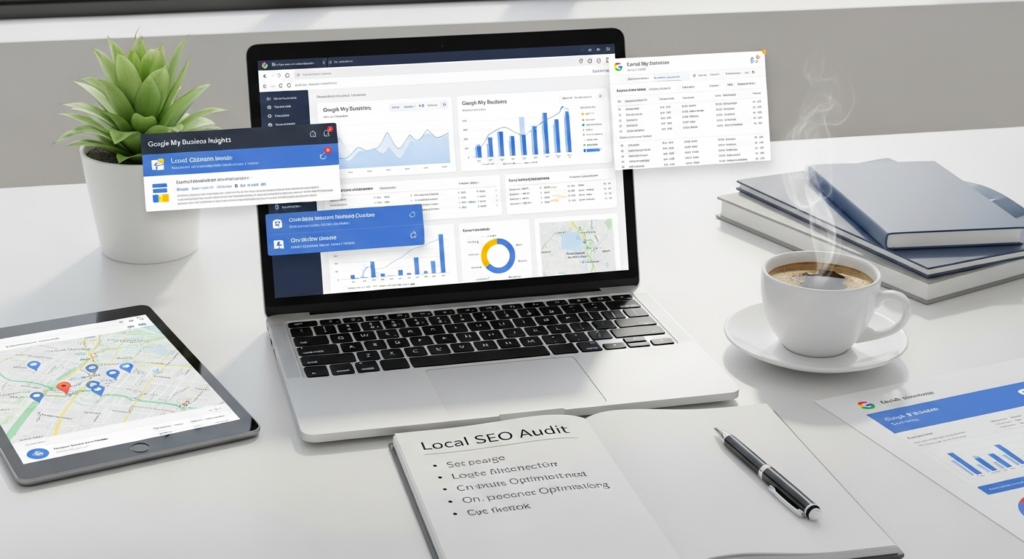
The first step in our remote local SEO process is conducting a thorough audit of your current online presence. This involves examining every touchpoint where potential customers might encounter your business online.
Key elements we analyze include:
- Current Google Business Profile status and optimization level
- NAP (Name, Address, Phone) consistency across all online directories
- Existing local citations and their accuracy
- Current local search rankings for target keywords
- Competitor positioning in local search results
- Website technical SEO elements affecting local performance
- Review profiles and reputation management status
- Local link profile and authority signals
This audit provides a baseline understanding of where you stand and identifies the gaps that need addressing. We use specialized tools to crawl the web and find every mention of your business, comparing the information for consistency and accuracy.
Step 2: Local Keyword Research and Strategy Development
Understanding what your local customers are searching for is crucial. Remote local SEO requires meticulous keyword research that goes beyond generic terms to include location-specific variations and local intent signals.
We develop a comprehensive keyword strategy that includes:
- Primary service keywords with location modifiers
- Neighborhood and district-specific terms
- “Near me” search variations
- Local landmark-based queries
- Competitor brand terms combined with locations
- Long-tail keywords with local intent
| Keyword Type | Example | Search Intent | Priority Level |
|---|---|---|---|
| Service + City | “plumber in Austin” | High commercial intent | High |
| Service + Neighborhood | “emergency plumber Downtown Austin” | Urgent local need | High |
| Near Me Queries | “plumber near me” | Immediate local intent | Medium |
| Service + Landmark | “plumber near Austin City Hall” | Specific location need | Medium |
| Question-based Local | “best plumber in Austin TX” | Research phase | Medium |
This keyword strategy forms the backbone of all content creation, on-page optimization, and citation building efforts throughout the process.
Step 3: Google Business Profile Optimization

Your Google Business Profile (formerly Google My Business) is the cornerstone of local SEO success. Optimizing this completely is non negotiable for remote local SEO success.
Complete optimization includes:
- Verification of business ownership through appropriate method
- Selection of the most accurate and specific business categories
- Complete business information including hours, services, and attributes
- High-quality photos showcasing your business, team, and work
- Regular posts sharing updates, offers, and relevant content
- Strategic use of keywords in business description
- Booking links and appointment scheduling integration
- Product or service listings with detailed descriptions
We ensure that every section of your Google Business Profile is not just filled out, but optimized with relevant keywords and compelling information that encourages potential customers to choose your business over competitors.
Step 4: Citation Building and NAP Consistency
Citations are mentions of your business name, address, and phone number across the web. Building a strong citation profile while ensuring complete consistency is critical for local SEO success.
Our systematic approach includes:
- Submitting to major data aggregators (Neustar, Acxiom, Factual, Infogroup)
- Creating profiles on top local directories and review sites
- Industry-specific directory submissions
- Local chamber of commerce and business association listings
- Geographic-specific directories for your target locations
Priority citation sources by category:
| Category | Top Platforms | Impact Level |
|---|---|---|
| Universal Directories | Yelp, Facebook, Yellow Pages, Better Business Bureau | Critical |
| Data Aggregators | Neustar, Acxiom, Factual, Infogroup | Critical |
| Review Platforms | Google, Trustpilot, Angie’s List, HomeAdvisor | High |
| Social Media | Facebook, LinkedIn, Instagram, Twitter | High |
| Industry-Specific | (varies by business type) | Medium-High |
| Local Directories | City-specific sites, local blogs, regional platforms | Medium |
We maintain a detailed spreadsheet tracking every citation, login credentials, and submission dates to ensure nothing falls through the cracks when managing remotely.
Step 5: Website Localization and On Page Optimization
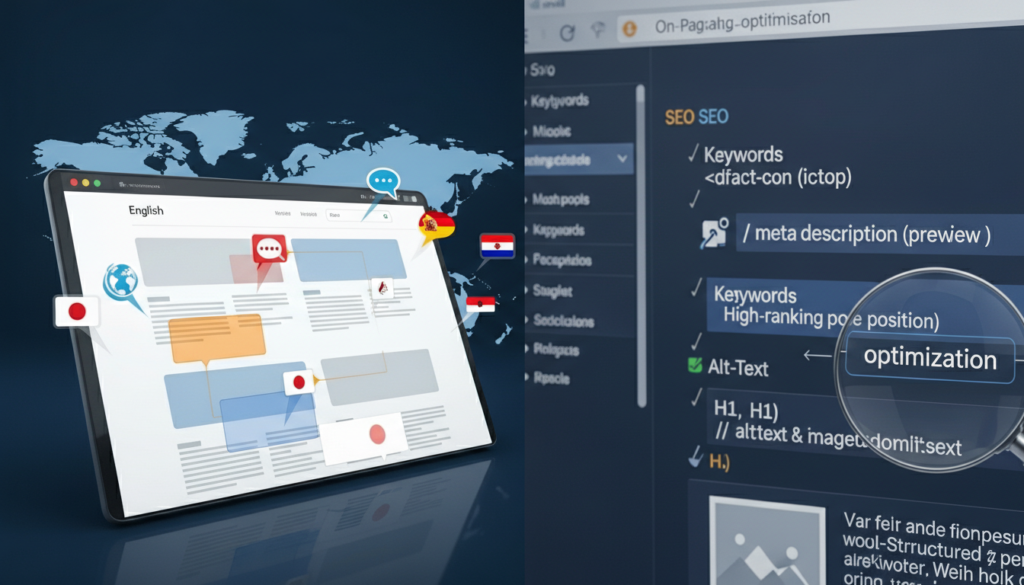
Your website needs to clearly communicate to both users and search engines that you serve specific local areas. This involves strategic on page optimization and content localization.
Critical on-page elements include:
- Location-specific title tags and meta descriptions
- Header tags incorporating local keywords naturally
- Schema markup for LocalBusiness, Service Area, and Review data
- Embedded Google Maps showing service areas
- Location pages for each service area or neighborhood
- Local phone numbers with proper formatting
- Address visible in footer or header
- Localized content throughout service pages
For businesses serving multiple locations, we create dedicated location pages that aren’t thin content but provide genuine value with area-specific information, directions, parking details, and local customer testimonials. If you’re pricing this work out, use this pricing guide to set realistic expectations.
Step 6: Content Creation with Local Focus
Content is where remote local SEO truly comes to life. Creating valuable, locally relevant content establishes your authority in your target market even when you’re managing from a distance.
Our content strategy includes:
- Location-specific blog posts addressing local concerns
- Guides featuring local landmarks, events, or characteristics
- Case studies and success stories from local customers
- Video content showcasing work in the local area
- Infographics with local statistics and data
- Community involvement and local event coverage
- Neighborhood guides and resource pages
The key is creating content that demonstrates genuine knowledge and investment in the local community, not generic content with location names arbitrarily inserted.
Step 7: Review Generation and Reputation Management
Online reviews are among the most powerful local SEO ranking factors. Systematically generating and managing reviews remotely requires a structured approach.
We implement:
- Automated review request campaigns via email and SMS
- Multiple review platform targeting (Google, Yelp, Facebook, industry-specific)
- Review monitoring and response protocols
- Negative review management and resolution strategies
- Review display widgets on website
- Integration of reviews into marketing materials
Review generation timeline and targets:
| Month | Target New Reviews | Focus Platform | Campaign Type |
|---|---|---|---|
| Month 1 | 8-10 | Google Business Profile | Email follow-up campaign |
| Month 2 | 8-10 | Google + Facebook | SMS + Email campaign |
| Month 3 | 10-12 | Multi-platform | Incentivized feedback campaign |
| Month 4+ | 10-15 monthly | All platforms | Automated ongoing system |
Responding to every review, both positive and negative, shows engagement and builds trust with potential customers reading your reviews.
Step 8: Local Link Building
Building high-quality local backlinks signals to search engines that your business is a legitimate part of the local community. This is particularly challenging when working remotely but absolutely essential.
Effective local link building tactics include:
- Sponsoring local events, teams, or charities
- Getting featured in local news publications and blogs
- Partnering with complementary local businesses
- Creating shareable local resources that attract links
- Guest posting on local business blogs
- Participating in local business associations
- Scholarship programs for local schools
- Local influencer collaborations
We track every link acquisition with anchor text, domain authority, and relevance to measure the impact on local rankings. If you’re considering outsourcing, compare options in best SEO companies.
Step 9: Performance Tracking and Reporting
What gets measured gets managed. Remote local SEO requires robust tracking systems to monitor progress and demonstrate ROI.
We track essential metrics including:
- Local pack rankings for target keywords
- Organic rankings for local search terms
- Google Business Profile insights (views, clicks, calls, direction requests)
- Website traffic from local geographic areas
- Conversion rates from local traffic
- Review quantity, rating, and sentiment
- Citation accuracy and consistency scores
- Local backlink acquisition and quality
Monthly reporting keeps all stakeholders informed and allows for data-driven strategy adjustments. We use tools like Google Analytics with geographic segmentation, Google Search Console for local query analysis, and specialized local SEO platforms for ranking tracking.
Step 10: Ongoing Optimization and Adaptation

Local SEO is not a one-time project but an ongoing process. Search algorithms evolve, competitors adjust their strategies, and local market dynamics shift. Our final step is really a continuous cycle of improvement.
Ongoing activities include:
- Regular Google Business Profile updates with posts and photos
- Continuous review generation and management
- Monthly content publication targeting local keywords
- Quarterly citation audits and cleanup
- Competitor monitoring and strategy adjustments
- Technical SEO maintenance and improvements
- Local search algorithm update adaptation
- Expansion into new service areas or locations
We schedule these activities systematically to ensure consistent progress without overwhelming resources.
Tools and Technology for Remote Local SEO Management
Successfully managing local SEO remotely requires the right technology stack. We leverage various tools to maintain visibility and control:
- Local rank tracking: BrightLocal, LocalFalcon, Whitespark
- Citation management: Moz Local, BrightLocal, Yext
- Review monitoring: Grade.us, Birdeye, ReviewTrackers
- Google Business Profile management: GMB Everywhere, LocalClarity
- Communication: Zoom, Slack, project management platforms
- Analytics: Google Analytics, Google Search Console, Data Studio
These tools enable efficient remote management while ensuring nothing slips through the cracks.
Common Challenges in Remote Local SEO and Solutions
Managing local SEO remotely presents unique challenges that require creative solutions:
Challenge 1: Limited local market knowledge
Solution: Deep research using local news sites, community forums, and social media groups. Regular virtual meetings with clients to understand local nuances.
Challenge 2: Building authentic local connections
Solution: Leverage client relationships, identify local brand ambassadors, and create genuinely valuable local content that naturally attracts community engagement.
Challenge 3: Verifying Google Business Profile without physical access
Solution: Use video verification, coordinate with clients for postcard verification, or utilize bulk verification for agencies.
Challenge 4: Creating location-specific content without being there
Solution: Use Google Street View, local photography services, client provided materials, and thorough research to create authentic local content.
Conclusion
Remote local SEO is entirely achievable with the right process, tools, and dedication. By following this step by step approach from comprehensive auditing through ongoing optimization businesses can successfully compete in local search results regardless of physical proximity to their target markets.
The key to success lies in maintaining consistency, building genuine local relevance, and creating systems that ensure no critical element is overlooked. While the process requires significant upfront effort, the long-term benefits of increased visibility, customer acquisition, and sustainable growth make it an invaluable investment.
Start with a thorough audit of your current standing, develop a comprehensive strategy addressing all ten steps, and commit to the ongoing nature of local SEO success. Whether you’re managing your own business’s local presence or serving clients as an agency, this systematic approach will deliver measurable results and sustainable competitive advantages in your target local markets.
Remember that local SEO is a marathon, not a sprint. Patience, persistence, and systematic execution of this process will compound over time, establishing your business as a dominant force in local search results and driving consistent, qualified traffic that converts into loyal customers.