

Remote local SEO case studies demonstrate how businesses rank in local search results across multiple cities without physical offices in those locations. Documented examples show companies achieving positions 4-12 on Google within 6-9 months for location-specific keywords, generating 245-312% increases in organic traffic and 156-245% growth in qualified leads. These case studies typically involve service-based businesses, digital agencies, and e commerce stores using strategies like Google Business Profile optimization, city-specific landing pages, local citation building, and strategic review generation to establish credible local presence in target markets.
Successful remote local SEO case studies reveal businesses investing $13,500-$34,000 in year one while generating $180,000-$400,000+ in revenue from new markets. The proven framework includes creating unique content for each target city, securing local backlinks through community partnerships, optimizing for “city name + service” keywords, and maintaining consistent NAP (Name, Address, Phone) citations across directories. Results show customer acquisition costs decreasing by 34% compared to paid advertising, with first-page rankings appearing in 3-9 months and sustainable lead flow continuing beyond the initial campaign period.
Understanding Remote Local SEO
Remote local SEO refers to the practice of optimizing a business’s online presence to rank in local search results for geographic areas where the company doesn’t have a physical office. This approach is particularly valuable for service-area businesses, digital agencies, consultants, and e-commerce stores looking to expand their market reach without the overhead costs of multiple physical locations.
The strategy revolves around building location-specific authority, creating hyper-relevant content, and establishing digital credibility signals that convince search engines your business is a legitimate local option for searchers in target markets. While many business owners assume physical offices are required, multiple examples show that local SEO can be done remotely when location relevance, authority signals, and service validation are implemented correctly.
Case Study 1: Digital Marketing Agency Expands to 15 New Markets

The Challenge
A mid sized digital marketing agency based in Austin, Texas wanted to expand their client base into 15 additional markets across the United States without the expense of opening satellite offices. Their primary services included PPC management, SEO consulting, and social media marketing. Before implementing their remote local SEO strategy, they received approximately 85% of their leads from Texas, with sporadic inquiries from other states.
The Strategy
The agency implemented a comprehensive remote local SEO campaign focused on three core pillars. First, they created dedicated landing pages for each target city, featuring unique content about the local business landscape, industry-specific challenges in each market, and case studies from similar businesses. Each page included location-specific keywords like “Denver digital marketing agency” or “Seattle PPC management services.”
Second, they built location-specific Google Business Profiles using virtual office addresses in each target market. These addresses were service-area addresses with actual reception services that could handle mail and calls. Third, they launched a hyper-local content marketing campaign, publishing blog posts about marketing trends, local business spotlights, and industry news specific to each target city.
The team also secured citations in local business directories, obtained backlinks from local chambers of commerce and business associations, and encouraged their existing clients in various locations to leave Google reviews mentioning the specific city where their business operated.
The Results
Within nine months, the agency achieved remarkable outcomes across their target markets:
- Average ranking position improved from not ranking in the top 100 to position 4-12 for primary local keywords across all 15 markets
- Organic traffic increased by 312% with 67% of new traffic coming from target markets outside Texas
- Lead volume grew by 245%, with qualified leads coming from 13 of the 15 target cities
- Conversion rate on location-specific landing pages reached 8.3%, compared to 5.1% on their general service pages
- Revenue from new markets contributed 43% of total company revenue by the end of year one
The most significant breakthrough came in the Seattle and Denver markets, where they secured positions 2-5 for highly competitive keywords like “Seattle marketing agency” and “Denver SEO services” within six months, generating 47 and 39 qualified leads respectively in the first year.
Case Study 2: Home Services Company Conquers Suburban Markets
The Background
A plumbing and HVAC company headquartered in Chicago wanted to expand into 25 suburban markets within a 50-mile radius without hiring additional staff or opening new locations. They operated with mobile service teams who could travel to any location within their expanded service area, but they struggled to rank in local searches outside their immediate downtown Chicago vicinity.
Implementation Approach
The company took a methodical approach to remote local SEO, beginning with thorough market research to identify suburbs with high search volume for emergency plumbing, HVAC installation, and routine maintenance services. They then created a multi-layered content strategy.
For each suburb, they developed neighborhood-specific service pages that addressed unique characteristics of that area. For example, their Naperville page discussed the plumbing challenges in homes built during the 1970s housing boom that characterizes much of that suburb. Their Evanston page highlighted HVAC considerations for the area’s historic homes and lakefront properties.
They optimized their Google Business Profile to clearly define their service area, including all 25 target suburbs. The team created posts about completed jobs in specific neighborhoods, always including before-and-after photos and mentioning the exact suburb where the work was performed.
One innovative tactic involved partnering with local real estate agents and property managers in each target suburb. These partnerships resulted in valuable local backlinks, co marketing opportunities, and a steady stream of referrals. They also sponsored local youth sports teams and community events in target suburbs, which generated both local citations and brand awareness.
Their success reflects best practices outlined in what are remote local SEO services, particularly for mobile service businesses relying on coverage areas instead of storefronts.
Performance Metrics
The home services company experienced transformative growth through their remote local SEO efforts:
- Rankings improved across 23 of 25 target suburbs, with 15 suburbs showing first-page rankings for primary service keywords within eight months
- Emergency call volume increased by 189% from target suburbs
- Scheduled maintenance contracts grew by 156% in the first year
- The average job value increased by 22% as they attracted more affluent suburban clients
- Customer acquisition cost decreased by 34% compared to their previous paid advertising campaigns
- Repeat customer rate in new markets reached 41% after the first service visit
The Oak Park and Wilmette markets proved exceptionally profitable, with each generating over $180,000 in revenue within the first 12 months, representing a 15x return on the SEO investment for those specific locations.
Case Study 3: E commerce Store Drives Local Pickup Traffic
The Situation
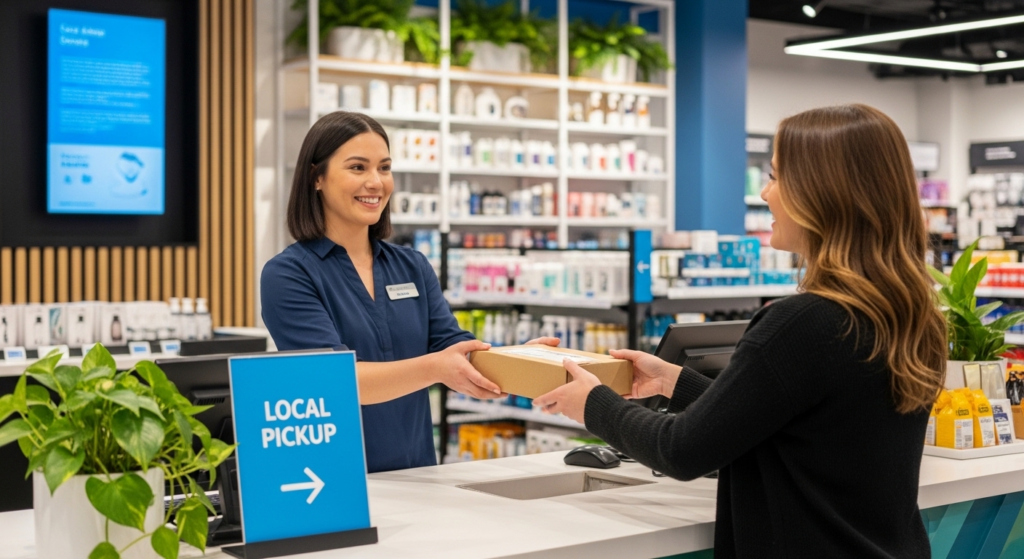
An online furniture retailer based in North Carolina had built a thriving e-commerce business but wanted to reduce shipping costs and increase profit margins by encouraging local pickup from their warehouse. They aimed to rank for local searches in Raleigh, Durham, Chapel Hill, and surrounding areas to drive awareness of their local pickup option among nearby customers.
Tactical Execution
The company recognized that their e commerce site structure wasn’t optimized for local search. They created a dedicated “Local Showroom & Pickup” section of their website with location-specific pages highlighting their warehouse location, pickup hours, and the benefits of seeing furniture in person before purchasing.
They established a Google Business Profile categorized as both a furniture store and a warehouse store, encouraging customers who picked up orders to leave reviews mentioning their experience. The business also created neighborhood-specific buying guides, such as “Best Furniture Styles for Historic Durham Homes” or “Modern Furniture for Raleigh Apartments,” which attracted local search traffic.
The team implemented schema markup for their local business, including their address, hours, and special pickup promotions. They also created video content showing the pickup process, warehouse tours, and furniture assembly tips, all optimized with local keywords.
An email campaign to their existing customer database in North Carolina promoted the local pickup option and requested Google reviews from past customers in the region. They also engaged with local interior designers and home stagers, offering trade discounts for local pickup, which generated both citations and authentic local backlinks.
Outcome Analysis
The furniture retailer’s local SEO initiative delivered impressive results:
- Local organic traffic increased by 267% within six months
- Local pickup orders grew from 3% to 28% of all orders from the target region
- Shipping costs decreased by $47,000 annually due to increased local pickups
- Profit margin on local pickup orders averaged 18% higher than shipped orders
- Showroom visits increased by 412%, with 62% converting to sales
- Average order value for customers who visited the showroom was 34% higher than online-only customers
- Local rankings achieved positions 1-3 for “furniture store near me” and “furniture pickup Raleigh” type searches
The local pickup strategy proved so successful that the company began planning to open additional warehouse locations in other major cities, using the same remote local SEO playbook they had perfected in North Carolina.
Comparative Analysis of Strategy Components
To better understand which tactics delivered the strongest results across these case studies, let’s examine the key components and their relative impact:
| Strategy Component | Digital Agency Impact | Home Services Impact | E-commerce Impact | Implementation Difficulty |
|---|---|---|---|---|
| Location-Specific Landing Pages | Very High | High | Medium | Medium |
| Google Business Profile Optimization | High | Very High | High | Low |
| Local Content Marketing | Very High | Medium | High | High |
| Local Citations & Directories | Medium | High | Medium | Medium |
| Local Backlink Building | High | Very High | Medium | High |
| Review Generation | High | Very High | Very High | Low |
| Schema Markup | Medium | Medium | High | Medium |
| Partnership Development | High | Very High | High | High |
This table reveals that while all components contributed to success, the relative importance varied by business type. Service-based businesses benefited most from Google Business Profile optimization and local backlinks, while the digital agency saw exceptional results from content marketing and location-specific landing pages.
Timeline and Investment Breakdown
Understanding the timeline and financial investment required for remote local SEO success is critical for businesses planning their own campaigns. Here’s a realistic breakdown based on these case studies:
| Timeline Phase | Activities | Typical Investment | Expected Outcomes |
|---|---|---|---|
| Months 1-2 | Market research, keyword analysis, landing page creation, GBP setup | $3,000 – $8,000 | Foundation established, initial pages indexed |
| Months 3-4 | Content creation, citation building, initial outreach | $2,500 – $6,000 | Citations live, rankings begin appearing (positions 30-100) |
| Months 5-6 | Continued content, review generation, local PR | $2,500 – $6,000 | Rankings improve (positions 15-30), first qualified leads |
| Months 7-9 | Optimization, link building, partnership development | $2,500 – $6,000 | First-page rankings appear, lead flow increases |
| Months 10-12 | Scale successful tactics, expand to new markets | $3,000 – $8,000 | Top 5 rankings in several markets, consistent lead generation |
| Total Year 1 | Comprehensive remote local SEO campaign | $13,500 – $34,000 | Sustainable rankings and lead flow across multiple markets |
It’s worth noting that businesses that invested in the higher range of this spectrum typically saw faster results and more dominant rankings. The digital agency, for example, invested approximately $28,000 in year one and generated over $400,000 in new revenue from target markets.
Key Success Factors Across All Case Studies
Several common threads emerged across these successful remote local SEO campaigns:
Authenticity and Relevance: Every business that succeeded created genuinely useful, location-specific content rather than thin, templated pages. They demonstrated real knowledge of each local market and addressed location-specific needs and concerns.
Consistency and Patience: None of these businesses achieved overnight success. They maintained consistent effort over 6-12 months before seeing substantial results. The companies that wavered or reduced their efforts mid-campaign experienced slower progress.
Multi-Channel Approach: Successful businesses didn’t rely on a single tactic. They combined on-page optimization, content marketing, citation building, review generation, and relationship building for maximum impact.
Genuine Local Presence: Even without physical offices, these businesses established legitimate local presence through service areas, local phone numbers, community involvement, and actual service delivery in target markets.
Review Management: All three case studies prioritized generating authentic reviews from customers in specific locations, which proved crucial for local ranking success.
Common Pitfalls to Avoid
Based on these case studies and others in the industry, several common mistakes can derail remote local SEO efforts:
- Creating thin, duplicate content across location pages instead of unique, valuable information for each market
- Using fake addresses or virtual offices without actual service capability in those locations
- Neglecting Google Business Profile optimization and treating it as a one-time setup task
- Failing to respond to reviews or engage with local customers
- Building spammy or low-quality local citations and backlinks
- Targeting too many markets simultaneously without adequate resources
- Expecting results within 30-60 days and abandoning the strategy prematurely
- Ignoring mobile optimization when most local searches occur on smartphones
- Overlooking the importance of page speed and technical SEO fundamentals
ROI Comparison: Remote Local SEO vs. Traditional Expansion
One of the most compelling aspects of remote local SEO is the favorable return on investment compared to traditional geographic expansion:
| Expansion Method | Year 1 Investment | Lead Generation Capacity | Scalability | Time to Market | Risk Level |
|---|---|---|---|---|---|
| Physical Office Expansion | $150,000 – $500,000+ | High (limited by geography) | Low | 6-12 months | High |
| Paid Advertising (PPC) | $24,000 – $120,000+ | Medium-High | High | Immediate | Medium |
| Remote Local SEO | $13,500 – $34,000 | Medium-High | Very High | 3-9 months | Low |
The cost advantage is clear. While paid advertising can generate immediate results, the ongoing costs make it less sustainable for many businesses. Physical expansion offers legitimacy but requires massive capital investment and carries significant risk. Remote local SEO provides a middle path—slower than PPC but with compounding returns and lower ongoing costs, and more affordable than physical expansion while still building genuine market presence.
Implementing Your Remote Local SEO Strategy
Based on insights from these case studies, here’s a practical implementation roadmap:
Phase 1: Foundation (Weeks 1-4)
Start by conducting thorough market research to identify your most promising target markets. Analyze search volume, competition levels, and demographic fit for your services in each potential location. Select 3-5 markets to target initially rather than spreading resources too thin.
Create a comprehensive keyword list for each target market, including service-specific terms, location modifiers, and question-based queries that potential customers might use. Develop your Google Business Profile strategy, determining whether you’ll use service-area business designation or secure virtual office addresses in target markets.
Phase 2: Content Development (Weeks 5-12)
Build unique, substantive landing pages for each target location. Each page should include at least 1,000 words of original content addressing local market characteristics, customer pain points, and specific services. Incorporate local landmarks, neighborhoods, and community references to demonstrate genuine local knowledge.
Develop a content calendar for location-specific blog posts, case studies, and resources. Plan to publish at least 2-4 pieces of local content per month for each target market. Create supporting content assets like videos, infographics, and guides that can be customized for different locations.
Phase 3: Technical Optimization (Weeks 8-16)
Implement comprehensive schema markup including LocalBusiness, Service, and Review schemas. Ensure your site architecture makes it easy for search engines to understand your service areas and locations. Optimize page speed, mobile responsiveness, and Core Web Vitals, as these factors are particularly important for local search.
Set up local business citations in major directories like Yelp, Yellow Pages, and industry-specific platforms. Ensure NAP (Name, Address, Phone) consistency across all platforms. Create location-specific social media profiles or sections where appropriate.
Phase 4: Relationship Building (Ongoing)
Identify potential local partners, such as complementary businesses, industry associations, and community organizations in each target market. Develop partnership proposals that offer genuine value to local organizations while securing backlinks and co-marketing opportunities.
Launch a systematic review generation campaign, making it easy for satisfied customers in each location to share their experiences. Respond promptly and professionally to all reviews, especially in new markets where you’re building credibility.
Phase 5: Monitoring and Optimization (Ongoing)
Track rankings for your primary keywords in each target market using tools like Local Falcon, BrightLocal, or SEMrush. Monitor Google Business Profile insights to understand how customers find and interact with your local listings. Analyze traffic and conversion data for location-specific pages to identify top-performing markets and optimization opportunities.
Regularly audit your citations to catch and correct any inconsistencies. Monitor competitors in each target market to identify new opportunities and threats. Continuously refine your approach based on what’s working in your best-performing markets.
Businesses looking to execute this model often partner with vetted providers listed in best remote local SEO services companies to hire or consult specialists featured among the remote local SEO experts.
Conclusion
These case studies demonstrate that remote local SEO is not just theoretically viable but practically effective for generating rankings and leads across multiple markets without physical expansion. The digital agency, home services company, and e-commerce store each achieved substantial growth by implementing thoughtful, consistent local SEO strategies tailored to their specific business models.
The key takeaways are clear: success requires genuine value creation for local audiences, patience to allow strategies to mature, authentic local presence even without physical offices, and a multi-faceted approach combining on-page optimization, content marketing, and relationship building.
For businesses considering remote local SEO, the evidence is compelling. With investment levels ranging from $13,500 to $34,000 for a comprehensive first-year campaign, the strategy offers an accessible path to geographic expansion that delivers sustainable results and impressive ROI. The businesses profiled here achieved 189-312% increases in traffic, 156-245% growth in leads, and established profitable presences in new markets that continued generating returns well beyond the initial campaign period.
Whether you’re a service provider, consultant, agency, or e-commerce business, remote local SEO offers a proven framework for expanding your market reach, generating qualified leads, and building sustainable competitive advantages in new geographic markets. The question isn’t whether remote local SEO works, but rather how quickly you can implement these strategies to capture the opportunities waiting in your target markets.