
In today’s digital-first world, content is the backbone of every marketing, educational, and informational strategy. But not all content delivers the same value. For companies managing distributed teams, maintaining consistent content quality can be a daunting challenge. A structured content quality rating workflow ensures that every piece of content meets your standards, aligns with your brand voice, and resonates with your audience even when your team is fully remote.
Building a remote workflow for content quality rating isn’t just about checklists or approval forms. It’s about creating a seamless process where editors, writers, and reviewers collaborate efficiently, feedback is actionable, and quality metrics are clear and measurable. By combining smart tools, well-defined criteria, and a culture of accountability, organizations can maintain high-quality content output, boost engagement, and reduce costly revisions all without being tied to a physical office.
Understanding the Importance of a Content Quality Rating Workflow
Content is more than words on a page it reflects your brand’s credibility and authority. Poor-quality content can damage trust, reduce engagement, and negatively impact SEO. A standardized quality rating system helps teams evaluate content objectively using proven digital content scoring criteria, such as accuracy, clarity, and intent matching
(see detailed factors here:
https://remoteonlineevaluator.com/7-critical-factors-in-digital-content-scoring/
- Identify high-performing content
- Spot gaps in messaging or style
- Ensure consistency across channels
- Facilitate actionable feedback for writers and editors
A remote workflow ensures that these evaluations happen seamlessly, even when your team is distributed across different locations.
Key Components of a Content Quality Rating Workflow
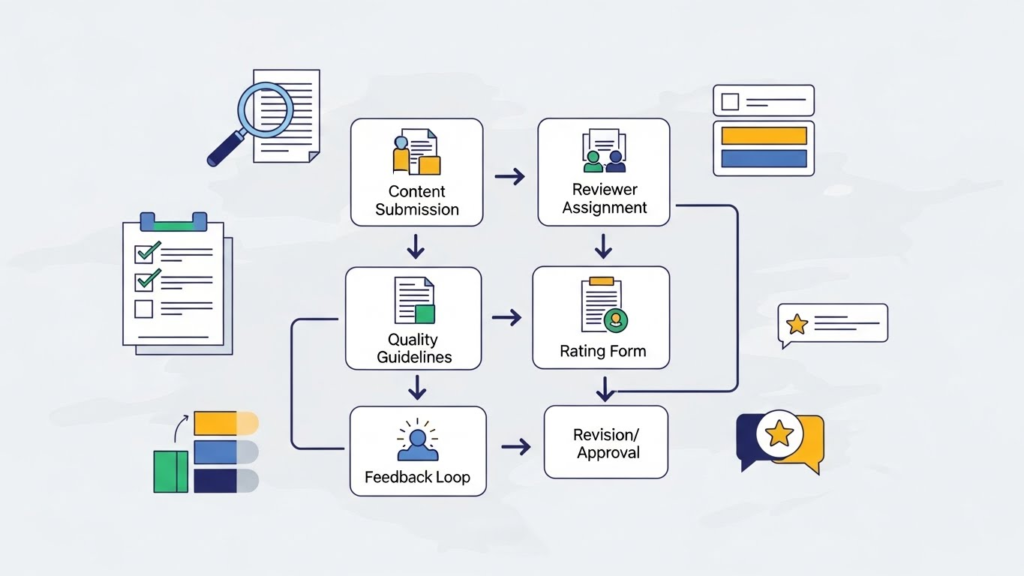
A successful workflow isn’t just about reviewing content—it’s about creating a repeatable, transparent system. Key components include:
1. Standardized Rating Criteria
Define what “quality” means for your brand. Typical criteria include:
- Accuracy and factual correctness
- Relevance to target audience
- Readability and grammar
- SEO optimization (titles, meta descriptions, headers)
- Visual elements (images, videos, charts)
- Engagement potential (call-to-actions, storytelling)
Creating a standardized scoring system (e.g., 1–5 or 1–10 scale) allows reviewers to assess content consistently.
2. Clear Roles and Responsibilities
For remote teams, clarity is critical. Assign responsibilities such as:
| Role | Responsibilities |
|---|---|
| Content Writer | Create initial draft following brand guidelines |
| Editor | Review for grammar, structure, readability |
| SEO Specialist | Optimize for keywords, internal linking, meta tags |
| Quality Reviewer | Evaluate content against rating criteria |
| Project Manager | Track workflow, manage deadlines, communicate feedback |
This table simplifies role allocation and ensures accountability.
3. Workflow Tools and Platforms
Remote teams depend heavily on collaboration tools to maintain efficiency. Many professional reviewers rely on specialized remote task reviewer tools to manage evaluations, feedback, and scoring efficiently
https://remoteonlineevaluator.com/top-remote-task-reviewer-tools/.
- Project management: Asana, Trello, Monday.com
- Content editing: Google Docs, Microsoft Word Online
- SEO and analytics: SEMrush, Ahrefs, Google Analytics
- Communication: Slack, Microsoft Teams, Zoom
Choosing the right tools reduces bottlenecks and ensures transparency.
Step-by-Step Guide to Building a Remote Workflow
Creating a content quality rating workflow involves careful planning and practical implementation.
Step 1: Define Content Types and Objectives
Identify the types of content your team produces (blogs, product pages, social media posts) and the goal for each. For example:
| Content Type | Objective | Rating Focus |
|---|---|---|
| Blog Posts | Drive traffic & educate | Readability, SEO, engagement |
| Product Pages | Increase conversions | Accuracy, clarity, visual appeal |
| Social Media | Build brand awareness | Engagement, tone, visuals |
Knowing your goals allows the workflow to prioritize evaluation criteria effectively.
Step 2: Develop a Scoring System
Create a clear, numerical scoring system. A sample scoring rubric for blogs could include:
| Criteria | Score Range | Description |
|---|---|---|
| Accuracy | 1–5 | Factually correct, sources cited |
| Readability | 1–5 | Clear language, proper structure |
| SEO | 1–5 | Keywords included naturally, meta optimized |
| Visuals | 1–5 | Images, videos, charts relevant & high quality |
| Engagement | 1–5 | Call-to-actions, storytelling, readability |
A combined score helps prioritize content for publishing or revision.
Step 3: Assign Review Cycles
Schedule regular review cycles to avoid bottlenecks. Options include:
- Single-pass review: One reviewer checks content before publishing
- Two-pass review: Editor checks first, then quality reviewer scores
- Ongoing audits: Monthly review of existing content for updates
Step 4: Implement Feedback Loops
Effective feedback is actionable, not vague. Use structured comments such as:
- “The introduction lacks context—add 1–2 sentences about industry trends.”
- “Include at least two internal links to relevant pages.”
- “Consider adding a visual to support the data points in section 3.”
Regular feedback ensures writers improve over time and reduces repetitive errors.
Best Practices for Remote Teams

Maintaining content quality remotely requires a few key practices:
1. Transparent Communication
- Daily or weekly check-ins via video calls or messaging platforms
- Clearly document review decisions and rationale
- Use centralized dashboards to track progress
2. Training and Resources
Provide writers and reviewers with access to:
- Brand style guides
- SEO guidelines
- Examples of high-quality content
This ensures everyone is aligned on expectations.
3. Continuous Improvement
A content quality workflow should evolve. Use performance metrics such as:
- Page views
- Average time on page
- Social shares
- Conversion rates
This data informs adjustments to the scoring system and review process.
Common Challenges and How to Overcome Them
| Challenge | Solution |
|---|---|
| Inconsistent scoring | Use detailed rubrics with examples for each score |
| Delayed feedback | Set clear deadlines for reviews and reminders |
| Tool overload | Limit platforms to 3–4 essential tools |
| Miscommunication | Maintain written documentation for all feedback |
| Quality decline over time | Schedule periodic audits and refresher training |
Professionals working as remote online evaluators follow these exact practices to maintain consistent quality at scale
https://remoteonlineevaluator.com/how-to-become-a-successful-remote-online-evaluator-in-2026/.
Implementing a Remote Workflow

Imagine a marketing team with writers in different countries. Their workflow might look like this:
- Writer drafts a blog in Google Docs.
- Editor reviews grammar, clarity, and structure.
- SEO specialist adds meta tags and internal links.
- Quality reviewer scores the blog using the rubric.
- Project manager compiles scores and sends feedback.
- Writer revises content based on comments.
- Final approval is given, and the blog is published.
Using this structured approach ensures consistency and high standards regardless of location.
Internal Linking Suggestions
To enhance SEO and provide additional value:
- Anchor Text: “content marketing best practices” → link to related internal article
- Anchor Text: “remote collaboration tools” → link to internal guide
- Anchor Text: “SEO optimization tips” → link to SEO-focused content
Conclusion
Building a content quality rating remote workflow is no longer optional it’s a necessity for teams that want consistency, scalability, and trust in their content output. When quality standards are clearly defined and the review process is structured, remote teams can work with confidence instead of confusion. A well-designed workflow reduces back-and-forth, improves accountability, and ensures that every piece of content delivers real value to users, not just search engines.
Ultimately, the success of a remote content quality rating system depends on balance. The right mix of clear guidelines, collaborative tools, and human judgment allows teams to maintain high standards without slowing production. By continuously refining your workflow based on performance insights and reviewer feedback, you create a sustainable system that adapts as your content goals grow helping your brand build authority, credibility, and long-term impact in a competitive digital landscape.
FAQs
1. What is a content quality rating remote workflow?
A content quality rating remote workflow is a structured process that allows distributed teams to evaluate, review, and improve content quality consistently. It defines clear quality criteria, roles, and review stages so writers, editors, and reviewers can collaborate efficiently from anywhere.
2. Why is a remote content quality rating workflow important?
Remote teams often face challenges like inconsistent feedback, unclear standards, and communication gaps. A defined workflow ensures uniform quality, faster approvals, and accountability, helping businesses maintain high content standards without relying on in-office supervision.
3. Who should be involved in a content quality rating process?
A strong workflow typically includes content writers, quality raters or reviewers, editors, and a final approver or content manager. Each role has clear responsibilities, ensuring feedback is actionable and aligned with content goals.
4. What criteria should be used to rate content quality?
Content quality is usually rated on factors such as accuracy, relevance, originality, clarity, structure, SEO alignment, and user intent satisfaction. Clear scoring guidelines help reviewers provide consistent and objective evaluations.
5. How do you manage content quality reviews in a remote team?
Remote content quality reviews work best when supported by collaboration tools, documented guidelines, and standardized review templates. Regular check-ins, shared dashboards, and written feedback ensure smooth communication without constant meetings.
6. Can a content quality rating workflow improve SEO performance?
Yes. High-quality, well-reviewed content is more likely to meet search intent, improve engagement metrics, and build topical authority. A consistent quality rating system helps prevent thin, misleading, or low-value content that can hurt rankings.
7. How often should content quality standards be updated?
Quality standards should be reviewed periodically—especially after algorithm updates, changes in business goals, or shifts in audience behaviour. Continuous refinement keeps the workflow relevant and effective over time.
8. What are common mistakes to avoid in a remote quality rating workflow?
Common mistakes include vague quality criteria, too many approval layers, inconsistent reviewer feedback, and lack of performance tracking. Keeping the workflow simple, transparent, and data-driven leads to better results.