
As digital platforms continue to grow, the demand for skilled Digital Assessment Evaluators is rising rapidly. In 2026, companies across education, AI development, e-commerce, research, and online training rely heavily on human evaluators to review, analyze, and rate digital content. From scoring AI outputs to evaluating test responses, this role blends human judgment with technology. The increasing dependency on AI tools has opened new opportunities for Digital Assessment Evaluator, making it a stable, flexible, and future-ready work-from-home career.
Most organizations today prioritize accuracy and human insight—something AI alone cannot achieve. As a result, the role of a Digital Assessment Evaluator has become one of the most important behind-the-scenes jobs in the digital world. Whether you’re starting your first remote career or looking for an additional income stream, understanding this role can help you build a strong foundation for a long-term, high-growth path.
What Is a Digital Assessment Evaluator?
A Digital Assessment Evaluator is a professional responsible for reviewing, scoring, and analyzing digital content. The content may include:
- Online exam answers
- AI-generated responses
- Search engine results
- Chatbot interactions
- Product descriptions and listings
- Social media content
- Digital ads
- E-learning assignments
Companies hire evaluators to ensure quality, relevance, accuracy, and compliance. Their feedback helps improve AI systems, online assessments, and user experiences on digital platforms.
Why Digital Assessment Evaluators Are in High Demand in 2026
The year 2026 marks a major shift toward digital transformation. Here’s why this role is booming:
1. AI Systems Need Human Feedback
AI tools generate content, but human evaluators ensure correctness, tone, safety, and accuracy.
2. Online Education Is More Popular
Millions of learners take online tests, courses, and training programs that require human scoring.
3. Digital Businesses Need Quality Assurance
E-commerce, social media, and research platforms need evaluators to review content for relevance and accuracy.
4. Remote Work Culture Is Expanding
Companies prefer flexible teams of evaluators working from home, reducing operational costs.
Key Responsibilities of a Digital Assessment Evaluator
A Digital Assessment Evaluator may perform tasks like:
1. Reviewing AI-generated content
Ensuring accuracy, tone, grammar, logic, and compliance.
2. Rating search engine results
Checking whether search results match user intent.
3. Evaluating ads and social media posts
Ensuring they follow platform guidelines.
4. Scoring online assessments
Marking objective and subjective answers with fairness and accuracy.
5. Auditing e-commerce listings
Checking product descriptions, titles, images, and tags.
6. Providing detailed feedback
Helping companies improve systems based on evaluator insights.
Typical Tasks Table
| Task | Description | Platform Example |
|---|---|---|
| AI content evaluation | Review AI-generated text for accuracy | Appen, TELUS International |
| Search engine result rating | Check relevance of search results | RaterLabs, OneForma |
| Online assessment scoring | Score test answers objectively | DataForce, iSoftStone |
| Social media content evaluation | Check posts for tone and compliance | Welocalize, TELUS AI |
| Product listing review | Audit e-commerce listings | Amazon, Shopify projects |
Skills Required to Become a Digital Assessment Evaluator in 2026
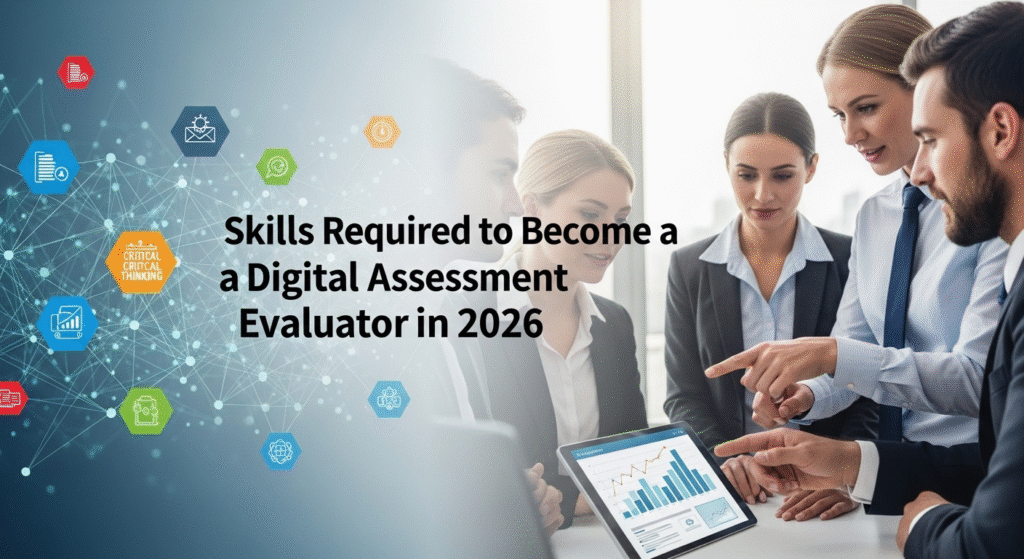
To succeed in this field, you need the following skills:
1. Strong English comprehension
You must understand grammar, sentence structure, tone, and context.
2. Analytical thinking
Ability to catch errors, identify patterns, and judge accuracy.
3. Research skills
Sometimes tasks require fact-checking or verifying online information.
4. Attention to detail
Even minor mistakes affect evaluation quality.
5. Familiarity with digital tools
Basic understanding of online platforms, dashboards, and rating systems.
6. Consistency in scoring
You must follow strict guidelines provided by the company.
Eligibility Requirements
Most companies do NOT require a degree, but they prefer candidates who:
- Are 18+
- Have stable internet
- Have a laptop or desktop
- Possess excellent reading and analytical skills
- Can follow instructions carefully
- Can commit 15–20 hours per week
Some companies require language tests or short training modules before hiring.
How to Become a Digital Assessment Evaluator in 2026 (Step-by-Step Guide)
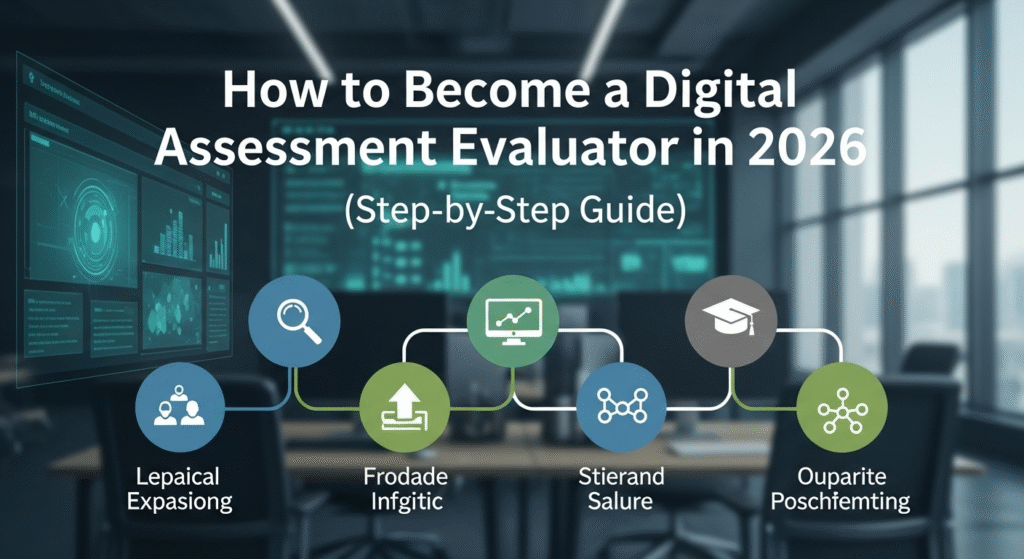
Follow these steps to start your career:
Step 1: Understand the Role
Before applying, research tasks like:
- Content evaluation
- AI response scoring
- Ad quality rating
- Search result evaluation
- Data annotation
This helps you identify which specialization suits you.
Step 2: Build Key Skills
Practice evaluating:
- Paragraphs for grammar
- AI-written responses
- Search results
- Social media captions
- Product descriptions
This builds your natural judgment and accuracy.
Step 3: Create a Professional Profile
Prepare a simple resume that highlights:
- Language skills
- Past freelance work
- Data entry or writing experience
- Online assessment knowledge
- Digital skills
You do NOT need advanced qualifications, but clarity matters.
Step 4: Apply to Legitimate Companies
Here are popular companies that hire Digital Assessment Evaluators:
Popular Platforms
- Appen
- TELUS International AI
- RaterLabs (USA)
- DataForce by TransPerfect
- OneForma
- iSoftStone
- Welocalize
- Remotasks (special evaluation projects)
These companies frequently hire for:
- AI training
- Content evaluation
- Search relevance rating
- Ad quality rating
Step 5: Complete the Test or Exam
Most companies test your:
- Grammar skills
- Comprehension
- Judgement
- Knowledge of guidelines
Passing these tests is the key step to getting hired.
Step 6: Start Working on Projects
Once approved, you will receive weekly tasks such as:
- Rating queries
- Analyzing AI answers
- Reviewing ads
- Checking product listings
- Scoring digital assessments
Projects can be flexible and part-time.
Step 7: Grow Your Experience
As you work, your accuracy and consistency improve. High-performing evaluators often get more:
- Hours
- Projects
- Higher-paying assignments
Benefits of Becoming a Digital Assessment Evaluator
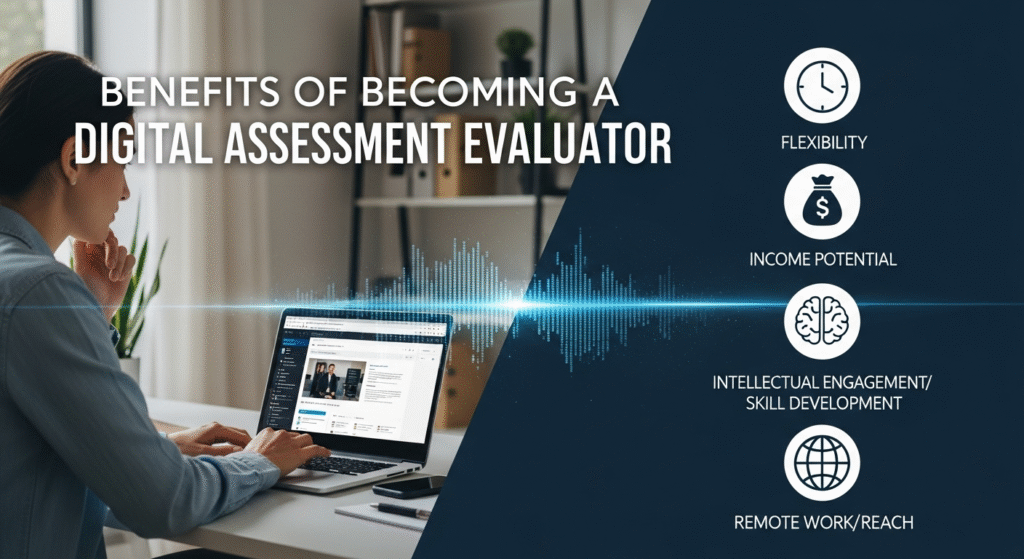
1. Work From Home Flexibility
You can work from anywhere, anytime.
2. No Degree Required
Skill matters more than academic qualifications.
3. High Demand Career
AI and digital platforms depend heavily on evaluators.
4. Weekly or Monthly Payments
Most companies pay through PayPal, Payoneer, or direct bank transfer.
5. Skill Growth
You become better at research, analysis, and digital literacy.
Salary of Digital Assessment Evaluators in 2026
Earnings depend on the company and project type.
| Country | Hourly Rate | Monthly Estimate (Part-Time) |
|---|---|---|
| USA | $10 – $18/hr | $600 – $1,500 |
| UK | £8 – £15/hr | £500 – £1,200 |
| Canada | $10 – $17/hr | $500 – $1,200 |
| Australia | $12 – $20/hr | $700 – $1,800 |
| India | ₹200 – ₹600/hr | ₹10,000 – ₹30,000 |
| Pakistan | Rs. 600 – 1,500/hr | Rs. 15,000 – 50,000 |
Payments vary depending on task difficulty and your performance.
Challenges of the Job

1. Strict Guidelines
You must follow instructions exactly as provided.
2. Inconsistent Workload
Some weeks have fewer tasks.
3. Accuracy Requirements
Low accuracy reduces your project availability.
4. Limited Communication
Companies rarely offer personal mentorship.
Tips to Succeed as a Digital Assessment Evaluator in 2026
Every company has specific rules and scoring systems for evaluation tasks. Reading and understanding these instructions before starting any task is crucial. Ignoring guidelines can lead to lower accuracy scores and reduced opportunities.
Prioritize Accuracy Over Speed
While completing tasks quickly may seem appealing, accuracy is far more important. Producing high-quality evaluations ensures better ratings, more projects, and long-term career growth.
Keep Your Digital Tools Ready
A stable internet connection, a reliable laptop or desktop, and necessary software are essential. Technical issues can disrupt workflow and negatively affect performance.
Take Regular Breaks
Continuous evaluation work can be mentally exhausting. Short breaks help maintain focus, prevent fatigue, and improve accuracy over long working sessions.
Stay Updated
AI systems and digital platforms evolve constantly. Staying informed about the latest trends and updates helps evaluators remain efficient and competitive.
Practice and Learn Continuously
Each task provides learning opportunities. Practicing evaluation tasks regularly improves judgment, analytical skills, and the ability to handle more complex assignments effectively.
Conclusion
Becoming a Digital Assessment Evaluator in 2026 is one of the most accessible and future-ready career paths for remote workers. With the rise of AI, digital learning, and online commerce, the demand for skilled evaluators continues to grow. This job does not require a degree, offers flexible hours, and provides opportunities for long-term growth.
If you have strong analytical thinking, attention to detail, and a passion for digital platforms, this role can be a perfect entry point into the world of AI-assisted careers. With consistent performance and learning, you can turn this into a stable income stream while working comfortably from home.
FAQs
1. What is a Digital Assessment Evaluator?
A Digital Assessment Evaluator is a professional who reviews, scores, and analyzes digital content such as AI-generated text, online tests, search results, social media posts, and e-commerce listings. Their feedback ensures accuracy, quality, and compliance with platform guidelines.
2. Do I need a degree to become a Digital Assessment Evaluator?
No formal degree is required. Companies mainly look for strong language skills, analytical thinking, attention to detail, and the ability to follow instructions accurately.
3. Can I work from home as a Digital Assessment Evaluator?
Yes, most Digital Assessment Evaluator roles are remote. All you need is a stable internet connection, a laptop or desktop, and basic familiarity with online platforms.
4. What skills are required for a Digital Assessment Evaluator?
Key skills include English comprehension, analytical thinking, attention to detail, research ability, consistency, and familiarity with digital tools and evaluation dashboards.
5. How much does a Digital Assessment Evaluator earn in 2026?
Earnings vary by country and project type. Hourly rates typically range from $10–$20 in the US, £8–£15 in the UK, ₹200–₹600 in India, and Rs. 600–1,500 in Pakistan for part-time work.
6. How do I get hired as a Digital Assessment Evaluator?
To get hired, you should create a professional profile, apply to reputable companies like Appen, TELUS International AI, or RaterLabs, and pass their evaluation tests or training modules.
7. What are the typical tasks of a Digital Assessment Evaluator?
Tasks include evaluating AI content, rating search engine results, scoring online assessments, auditing social media posts, and reviewing e-commerce listings for accuracy and compliance.
8. Is this a good long-term career option?
Yes. With the rise of AI, online learning, and digital platforms, the demand for skilled evaluators is expected to grow, making it a flexible and future-ready career.
9. What challenges do Digital Assessment Evaluators face?
Challenges include strict guidelines, inconsistent workload, high accuracy requirements, and minimal direct mentorship or feedback from companies.
10. How can I improve as a Digital Assessment Evaluator?
Focus on following guidelines strictly, maintaining high accuracy, practicing evaluation tasks regularly, staying updated with digital trends, and taking short breaks to maintain focus.