

AI evaluation jobs are roles where human workers review, rate, and provide feedback on artificial intelligence outputs to help companies train smarter and more accurate models. These workers, often called AI trainers, data annotators, or prompt engineers, are the invisible workforce powering the large language models and AI tools that millions of people use every day. Without their behind-the-scenes work, AI systems would produce inaccurate, biased, and unreliable results.
Understanding how AI evaluation jobs work behind the scenes reveals a structured, multi layered process involving task assignment, quality guidelines, human judgment, and iterative feedback loops. From rating chatbot responses to labelling images and evaluating search results, AI evaluators directly shape the behavior of tools like ChatGPT, Google Bard, and hundreds of other AI products. This guide breaks down the entire process so you know exactly what happens, who does it, how much it pays, and how to get started.
What Are AI Evaluation Jobs
AI evaluation jobs are remote or hybrid positions where individuals assess the quality, accuracy, safety, and usefulness of AI-generated content. Companies use this human feedback to improve their machine learning models through a process called Reinforcement Learning from Human Feedback (RLHF).
These jobs exist because AI models do not automatically know whether their outputs are good or bad. They need human judgment to understand nuance, context, cultural sensitivity, and factual accuracy. Every time you use an AI chatbot and it gives you a helpful, well-structured answer, that output was shaped by hundreds or thousands of human evaluators who rated similar responses before it.
Who Hires AI Evaluators
Major technology companies and AI research labs hire AI evaluators either directly or through specialized vendors. If you want to see exactly which organizations are actively recruiting right now, this updated breakdown of top companies hiring for digital evaluation work covers the most trusted and highest paying options available in 2026. Some of the biggest employers in this space include:
- Scale AI
- Remotasks
- Appen
- Telus International
- DataAnnotation.tech
- Surge AI
- Outlier AI
- Amazon Mechanical Turk
- Labelbox
- Cogito Tech
Core Types of AI Evaluation Tasks

Not all AI evaluation jobs are the same. The type of work depends on the AI system being trained. Here is a breakdown of the most common task categories:
1. Response Rating and Ranking
Evaluators are shown two or more AI generated responses to the same prompt and asked to rank them from best to worst. They judge based on helpfulness, accuracy, tone, and safety. This is one of the most common tasks and forms the backbone of RLHF training pipelines.
2. Data Annotation and Labelling
Workers label images, audio clips, videos, or text to help AI models recognize objects, emotions, intent, and language patterns. For example, labelling every car in thousands of images helps a self driving AI learn to identify vehicles.
3. Prompt Writing and Testing
Evaluators write creative, edge-case, or complex prompts to test how AI models respond under pressure. This helps identify weaknesses, hallucinations, and failure modes in the model.
4. Search Quality Rating
Companies like Google hire Search Quality Raters to evaluate whether search results match user intent. These workers follow detailed guidelines and rate pages on factors like trustworthiness, expertise, and relevance. People interested in this specific niche will find the complete list of best search engine evaluator jobs particularly useful, as it covers pay rates, required skills, and exactly how to apply for each company.
5. Safety and Content Moderation
AI evaluators review model outputs for harmful, biased, illegal, or misleading content. They flag problematic outputs and help train AI systems to refuse or redirect dangerous requests.
6. Fact Checking and Accuracy Review
Evaluators verify whether AI generated information is factually correct by cross referencing credible sources. This is especially important for AI tools used in healthcare, legal, and financial contexts.
How the Evaluation Process Works Step by Step
Understanding the exact workflow of AI evaluation gives a clear picture of how human feedback transforms raw model outputs into reliable AI tools.
| Step | Stage | What Happens |
|---|---|---|
| 1 | Task Assignment | Evaluator receives a batch of tasks through a platform dashboard |
| 2 | Guideline Review | Worker reads detailed instructions called rater guidelines or style guides |
| 3 | Task Completion | Evaluator rates, labels, writes, or compares AI outputs based on the criteria |
| 4 | Quality Check | A senior rater or automated system reviews a sample of submissions |
| 5 | Feedback Loop | Results are fed back into the AI model to update its training |
| 6 | Model Retraining | The AI model improves based on aggregated human feedback signals |
This process runs in continuous cycles. The more evaluation data a model receives, the more refined its outputs become. Most large AI companies run these cycles weekly or even daily during active development phases.
Skills Required for AI Evaluation Jobs
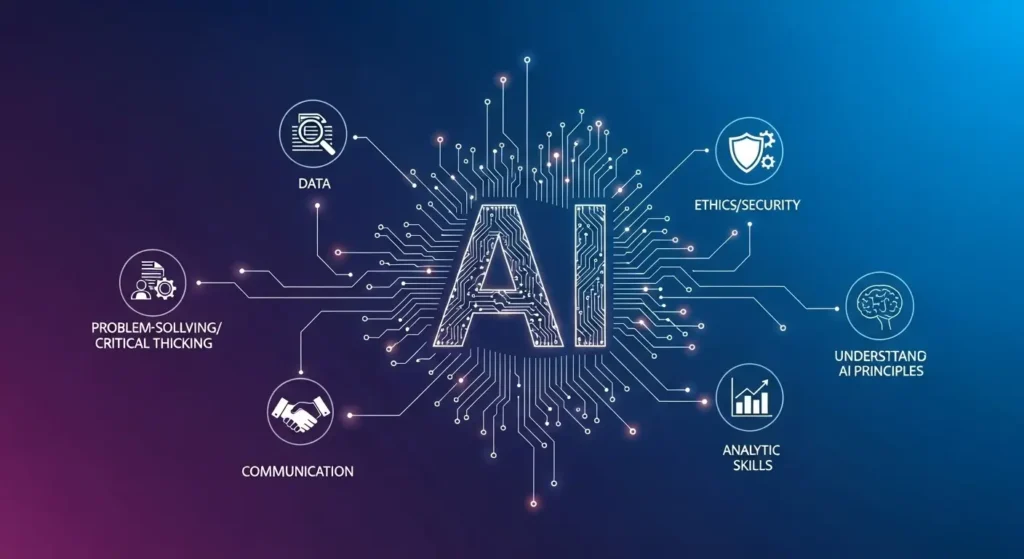
The barrier to entry is relatively low for basic tasks, but higher-paying roles require specialized knowledge. Here is what most employers look for:
Essential Skills for Beginners
- Strong reading comprehension and attention to detail
- Ability to follow complex written guidelines consistently
- Reliable internet connection and basic computer literacy
- Good judgment in assessing quality, tone, and accuracy
- Native or near-native fluency in the target language
Advanced Skills for Higher Paying Roles
- Domain expertise in medicine, law, finance, coding, or science
- Experience with machine learning or natural language processing
- Ability to write structured, diverse, and adversarial prompts
- Strong research skills for fact verification tasks
- Familiarity with AI safety principles and ethical frameworks
AI Evaluation Job Pay Rates and Structure
Pay varies widely depending on the task complexity, employer, and the evaluator’s location and qualifications. For anyone who wants a deeper look at earnings before committing, the full remote evaluator salary breakdown covers real figures across platforms, experience levels, and regions so you can set realistic income expectations.
| Job Type | Typical Pay Range (Per Hour) | Experience Level |
|---|---|---|
| Basic Data Annotation | $8 to $15 | Entry Level |
| Response Rating (RLHF) | $12 to $25 | Beginner to Intermediate |
| Search Quality Rating | $14 to $22 | Intermediate |
| Prompt Engineering and Testing | $20 to $45 | Intermediate to Advanced |
| Domain Expert Evaluation (Medical, Legal, Coding) | $30 to $80 | Advanced |
| Lead Rater or Quality Analyst | $25 to $55 | Senior |
Most platforms pay per task, per hour, or through a project-based rate. Payments are typically made via PayPal, direct bank transfer, or platforms like Payoneer. Workers in the United States, United Kingdom, Canada, and Australia tend to receive higher base rates than those in other regions.
The Role of Rater Guidelines
One of the most important documents in AI evaluation work is the rater guideline. These are detailed instruction manuals that tell evaluators exactly how to judge content. Google’s Search Quality Rater Guidelines, for example, is a publicly available document running over 170 pages.
Rater guidelines typically cover:
- How to assess the quality of information on a scale from lowest to highest
- What constitutes a harmful, misleading, or low-quality output
- How to evaluate user intent behind different types of queries
- Examples of good and bad AI responses with explanations
- Instructions for handling edge cases, ambiguous situations, and sensitive topics
Evaluators who master these guidelines and demonstrate consistent, high quality judgment are often fast tracked into lead positions or higher-paying specialized projects.
Quality Control in AI Evaluation
AI companies invest heavily in ensuring that evaluator feedback is accurate and unbiased, because low quality human feedback leads to low-quality AI outputs.
Common quality control methods include:
- Gold standard tasks placed within regular batches to test rater accuracy
- Inter-rater agreement scores that measure how often evaluators agree with each other
- Regular calibration sessions where evaluators discuss difficult cases with team leads
- Automated detection of rushed, random, or patterned responses
- Periodic performance reviews that can result in task removal or platform bans
High-performing evaluators often unlock access to premium tasks with better pay, more interesting content, and longer project timelines.
Behind the Scenes: How Human Feedback Trains AI Models

When an evaluator rates a response as helpful and accurate, that signal gets recorded in the training dataset. When another evaluator rates a response as confusing or harmful, that signal is also recorded. Over thousands and millions of evaluations, patterns emerge.
The AI company uses these patterns to build a reward model, which is a secondary AI trained to predict what human evaluators prefer. The main AI model is then fine-tuned using this reward model through a process called Proximal Policy Optimization (PPO), one of the most common RLHF algorithms.
This is how models like GPT 4 and Claude learned to:
- Give structured, readable answers instead of raw text dumps
- Decline requests for harmful or dangerous content
- Adjust tone based on context
- Provide balanced perspectives on sensitive topics
- Acknowledge uncertainty instead of hallucinating confident-sounding wrong answers
Every improvement users notice in newer AI versions can often be traced back to changes in how human evaluators were trained and what feedback signals they provided.
Challenges Faced by AI Evaluators
Despite the important role they play, AI evaluators face several real-world challenges that are worth understanding.
Evaluators often work as independent contractors without job security, benefits, or guaranteed hours. Task availability fluctuates based on company needs and project cycles. Some workers report burnout from reviewing large volumes of repetitive content or disturbing material during safety evaluation tasks.
There is also the challenge of subjectivity. Two experienced evaluators can reasonably disagree on whether a response is helpful or not, especially for nuanced topics. This is why rater guidelines are so detailed and why calibration is such an important part of the quality control process.
How to Get Started in AI Evaluation
Getting your first AI evaluation job does not require a degree. Here is a practical path to follow:
| Platform | Best For | Application Process |
|---|---|---|
| Appen | Beginners and multilingual raters | Online application and language test |
| DataAnnotation.tech | Writers and coders | Skills test and short project |
| Outlier AI | Domain experts and researchers | Application, test, and interview |
| Remotasks | Image and text labeling | Free training modules and test |
| Telus International | Search quality raters | Application, English test, rater guidelines study |
Once accepted, most platforms provide onboarding materials and practice tasks. Building a track record of high accuracy scores on early tasks is the fastest way to access better-paying projects.
The Future of AI Evaluation Jobs
As AI models grow more capable, the nature of evaluation work is shifting. Simple labeling tasks are increasingly being automated, but demand for high-skill evaluators is growing fast. Companies need experts who can test AI systems on complex reasoning, coding problems, medical scenarios, and legal analysis where automated checks fall short.
The AI evaluation job market is expected to keep expanding as new models are released and existing ones are continuously improved. Workers who develop deep expertise in a specific domain and combine it with an understanding of AI systems will be best positioned for long term success in this field.
AI evaluation jobs are not just side gigs. They are foundational to how modern AI works. Every chat, every search result, and every AI-generated answer you interact with was shaped by people doing exactly this kind of work, often without any public recognition. Understanding how AI evaluation jobs work behind the scenes is the first step toward participating in one of the most important industries of our time.
Conclusion
AI evaluation jobs may seem simple from the outside, but behind the scenes, they play a critical role in shaping how modern AI systems behave, respond, and improve. Every rating, correction, and feedback loop directly impacts the accuracy, safety, and usefulness of AI tools used by millions of people worldwide. Without human evaluators, AI models would struggle to understand real-world intent, context, and quality standards.
As AI continues to grow across industries, the demand for skilled evaluators will only increase. This makes AI evaluation not just a flexible remote job, but a long term digital career opportunity. Whether you are starting as a beginner or looking to build a stable online income, understanding how these jobs work behind the scenes gives you a strong advantage in entering and succeeding in this field.