

In today’s fast-paced digital world, creating content that truly resonates with your audience goes beyond catchy headlines or clever copy. Brands and marketers increasingly rely on digital content scoring to measure the effectiveness of their content, understand audience behavior, and predict what will perform best. By analyzing multiple factors, from relevance to engagement metrics, content scoring gives actionable insights that help businesses optimize strategy and stay ahead of the competition.
Understanding the critical factors that drive high-performing content isn’t just for data analysts or AI specialists it’s essential for anyone looking to make their digital presence impactful. From assessing readability and structure to evaluating audience engagement and authority signals, each factor plays a role in predicting how content will perform. In this guide, we’ll break down the seven key elements of digital content scoring, showing you how to create content that not only attracts clicks but also builds lasting engagement.
Understanding Digital Content Scoring
Digital content scoring measures how well your content performs across metrics like engagement, relevance, and SEO impact. It helps identify which pieces resonate with your audience and which need improvement. By analyzing these scores, businesses can optimize content for better reach and results. You can learn more about how to become an expert AI model evaluation reviewer to better understand content assessment frameworks.
Why Traditional Metrics Fail
- Vanity Metrics: High page views or likes often correlate poorly with revenue. They indicate awareness but not necessarily intent or conversion.
- Siloed Data: Marketing often measures top-of-funnel metrics (traffic), while sales measures bottom-of-funnel metrics (closed deals). DCS bridges this gap by scoring content across the entire customer journey.
- Lack of Predictive Power: Traditional metrics are descriptive (what happened). DCS, when done correctly, is predictive (what is likely to happen next), allowing for proactive content strategy adjustments.
1.Funnel Stage Alignment & Intent Score
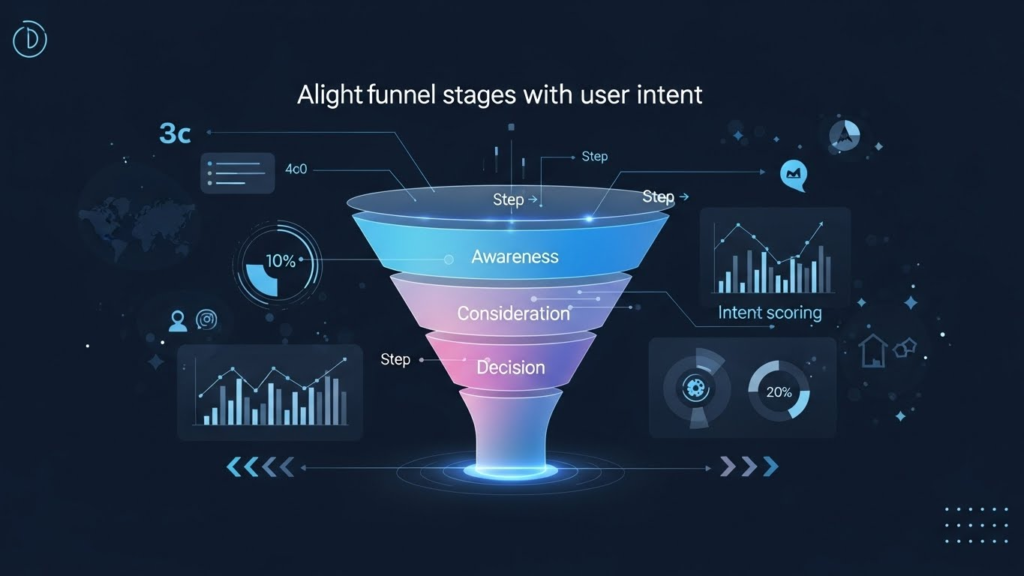
Funnel Stage Alignment & Intent Score means aligning your content or offers with where a customer is in their buying journey, whether it’s the awareness, consideration, or decision stage. The Intent Score indicates how likely a prospect is to take action based on their behaviour and engagement. Together, they help you target the right audience with the right message and improve conversions.
Scoring Mechanics
- Awareness Stage (TOFU): Content should score high for reach and first-time engagement (e.g., high impressions, social shares). Low point value per action.
- Consideration Stage (MOFU): Content should score high for data exchange and time spent (e.g., downloading a gated whitepaper, long video view). Medium point value per action.
- Decision Stage (BOFU): Content should score highest for conversion intent (e.g., clicking the ‘Contact Sales’ button, filling out a demo request). High point value per action.
Example: A user viewing a pricing page and watching a 5-minute product demo video should receive a score three times higher than a user reading a general blog post about industry trends.
2.Content Conversion Rate
Content Conversion Rate refers to the percentage of visitors who take a desired action after engaging with your content, such as signing up, downloading a resource, or making a purchase. It measures how effectively your content motivates users to complete specific goals. Understanding and tracking this rate helps optimize your content strategy to increase engagement, generate more leads, and drive higher sales.
Defining Conversion
Conversion doesn’t always mean a sale. It must be defined by the content’s goal:
- TOFU Goal: Conversion = Newsletter Signup / Lead Magnet Download
- MOFU Goal: Conversion = Webinar Registration / Case Study Download / Free Trial Activation
- BOFU Goal: Conversion = Demo Request / Contact Sales Form Submission / Purchase
$$\text{Content Conversion Rate} (CCR) = \frac{\text{Number of Conversions}}{\text{Number of Unique Content Views}} \times 100$$
High-Performing Prediction: Content with a significantly higher CCR than the departmental average demonstrates superior message-to-market fit and predictive success.
3.Lead Quality and Nurturing Score
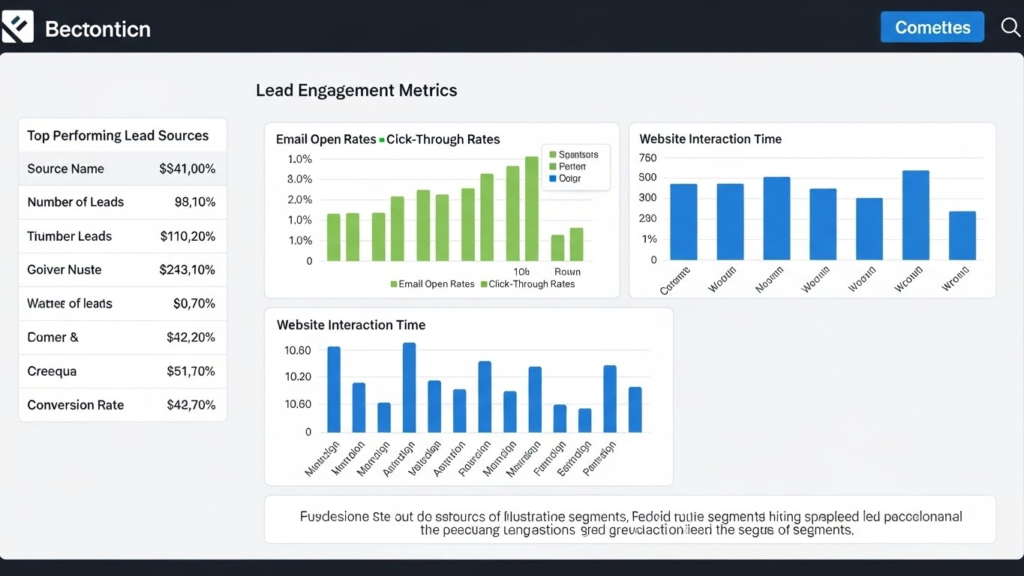
Lead Quality and Nurturing Score measures how valuable a lead is based on their fit, engagement, and likelihood to convert. Learn more about nurturing digital leads in our ultimate guide to AI training evaluator, which emphasizes scoring high-potential prospects effectively.
Scoring Mechanics
This factor relies on scoring the leads that engage with the content:
- Lead Fit Score (BANT/Demographics): How well the lead matches your Ideal Customer Profile (ICP) based on budget, authority, need, and timeline. High fit = high content score multiplier.
- Lead Activity Score (Nurturing Velocity): How quickly a lead progresses to the next funnel stage after consuming the content. Content that dramatically speeds up the nurture cycle (e.g., moves a lead from MQL to SQL in one day) is highly predictive of high performance.
| Content Type | Funnel Goal | Lead Fit Multiplier | Activity Multiplier |
| Industry Report | MOFU | 1.5x (Targets senior decision-makers) | High (Often moves leads to MQL) |
| Pricing Page | BOFU | 2.0x (High buying intent) | Very High (Immediate sales handover) |
| SEO Blog Post | TOFU | 1.0x (General audience) | Low (Long nurture cycle) |
Content that consistently attracts and advances high-fit leads is a stronger predictor of high performance than content that simply attracts a high volume of low-fit leads.
4.Consumption Metrics & Engagement Depth

Consumption Metrics & Engagement Depth track how users interact with your content and how deeply they engage with it. Consumption Metrics measure what content is being viewed, for how long, and how often, while Engagement Depth looks at the quality of interactions, like clicks, shares, and comments. Together, they help understand audience interest and optimize content for better performance.
Key Metrics for Engagement Depth
- Time on Page / Completion Rate: For long-form content or videos, a high time-on-page score (e.g., reading 80% of an article) is a strong predictor of success.
- Scroll Depth: Measuring how far down a user scrolls indicates investment.
- Interaction Frequency: Clicking on internal links, engaging with interactive elements (calculators, quizzes), or viewing multiple pieces of related content in a single session.
- Content Recency: Scoring content highly if a user returns to view it multiple times (suggesting it’s a valuable resource).
High-Performing Prediction: High engagement depth signals that the content has successfully captured the user’s attention and delivered high perceived value, making them more receptive to future marketing messages.
5.Distribution & Reach Effectiveness
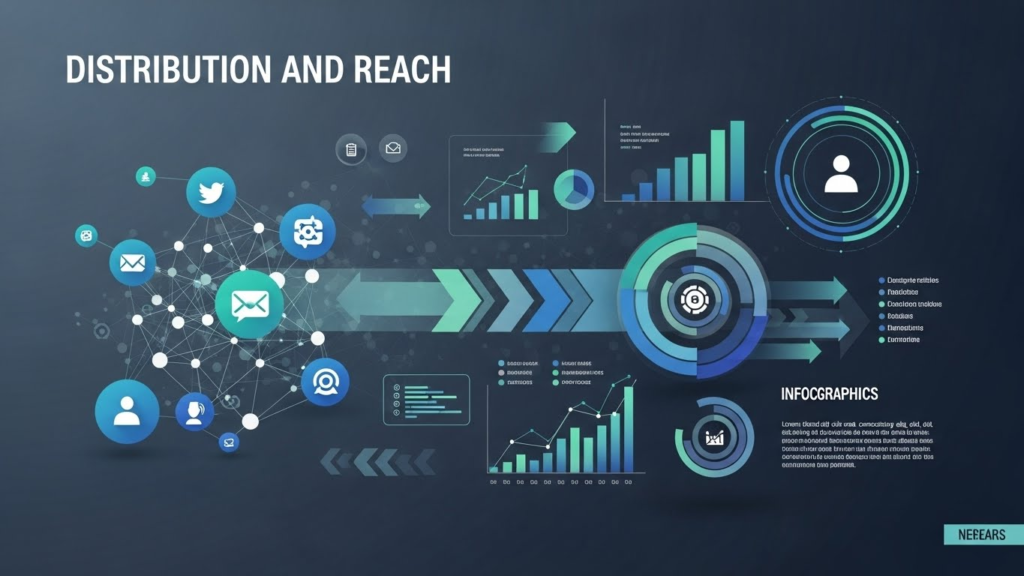
Distribution & Reach Effectiveness refers to how well your content or campaigns are delivered to your target audience and the extent of their visibility. It measures whether the right people are seeing your message at the right time. Optimizing this ensures maximum engagement, broader reach, and better overall impact of your marketing efforts.
Key Metrics for Reach Effectiveness
- Channel Efficiency Score: The ratio of content views to the cost/effort of the distribution channel. For example, a piece of content with high organic search traffic is scored higher than one that required a large paid ad spend for the same number of views.
- Social Amplification Rate: The frequency of shares, mentions, and inbound links, indicating viral or organic spread and authority.
- Domain Authority (DA) Backlinks: Receiving backlinks from high DA sites is a powerful predictor of long-term SEO performance and authority, scoring the content significantly higher.
Predictive Value: Content that achieves high reach with minimal paid effort or high-quality backlinks is predicted to have strong, sustainable performance.
6.Content Recency, Decay, and Maintenance Score
Content Recency, Decay, and Maintenance Score measures how fresh and relevant your content is over time. Recency looks at how recently the content was created or updated, Decay tracks how its performance or engagement drops over time, and Maintenance Score evaluates how well content is updated and optimized to stay effective. Together, these metrics help ensure your content remains valuable, visible, and impactful for your audience.
Scoring Components
- Decay Rate: The speed at which a content piece’s traffic and conversion rate drops post-publication. Evergreen content (low decay rate) scores higher than topical or news-based content (high decay rate).
- Maintenance Cost/Score: Assigning a penalty score based on the effort required to update the content. Content that requires frequent, significant updates (e.g., articles about constantly changing tax laws) is scored lower than content that remains accurate for years.
- Update Impact Score: Scoring content highly after an update if the update significantly increases its traffic or conversion rate, proving the maintenance effort was worthwhile.
$$\text{Net Content Value} = \text{Conversion Score} – (\text{Decay Rate} \times \text{Maintenance Cost})$$
This factor helps predict which content assets offer the best long-term return on content investment (ROCI).
7.SEO & Technical Health Score
SEO & Technical Health Score refers to evaluating how well a website is optimized for search engines and how smoothly it performs technically. It checks factors like site speed, mobile-friendliness, indexing, and proper use of meta tags. Maintaining a high score ensures better visibility, improved user experience, and higher chances of ranking on search engines. For more practical SEO evaluation insights, check remote evaluator skills you need to get hired, which covers technical assessment frameworks.
Critical Technical Components
- Core Web Vitals: Content on pages with high Core Web Vitals (fast loading speed, good visual stability) is scored higher, as these directly impact user experience and Google ranking.
- Keyword Mapping & Authority: Scoring how effectively the content targets high-intent keywords and establishes topical authority (internal linking, structured data).
- Accessibility (A11Y): Content that meets WCAG standards (alt-text for images, proper heading structure) is scored higher, reflecting a wider potential audience and better user experience.
| Technical Factor | Scoring Impact | High-Performance Predictor |
| Page Speed (LCP) | Critical | Faster loading pages rank higher and have lower bounce rates. |
| Semantic Markup | High | Clear structure (H1, H2, Schema) improves search engine understanding and featured snippet potential. |
| Internal Link Score | High | Content that is well-linked to from important pages is considered authoritative and performs better. |
High-performing content is always technically flawless, ensuring maximum visibility and user satisfaction.
Conclusion
Mastering digital content scoring is no longer optional it’s essential for predicting which content will perform at the highest level. By carefully analyzing factors such as relevance, engagement potential, clarity, originality, SEO optimization, audience alignment, and distribution strategy, businesses and creators can make informed decisions that maximize visibility, reach, and impact. Each factor plays a critical role in shaping not just the quality of your content, but its ability to resonate with your audience and drive measurable results.
High-performing content isn’t just about creativity or volume it’s about data-driven insights and strategic optimization. Organizations that prioritize these seven critical factors can stay ahead of the competition, consistently produce content that connects, and achieve meaningful growth in digital engagement and conversions. By applying these principles, content creators can turn insights into actionable strategies that deliver lasting success in an ever-evolving digital landscape.
FAQs
1.What is digital content scoring?
Digital content scoring evaluates content based on factors like relevance, engagement, clarity, originality, SEO, audience fit, and distribution. It helps predict performance and guides improvements for better reach and impact.
2.Why is content scoring important for businesses?
Content scoring helps businesses focus on high-performing content, increase engagement, boost website traffic, and achieve better ROI from digital marketing efforts.
3.What are the 7 critical factors in digital content scoring?
The seven factors are relevance, engagement potential, clarity, originality, SEO optimization, audience alignment, and distribution strategy. Together, they determine how well content resonates and performs online.
4.How can digital content scoring improve SEO?
By prioritizing high-quality, relevant, and optimized content, scoring improves search rankings, attracts organic traffic, and ensures content aligns with user intent.
5.Can small businesses benefit from content scoring?
Yes, it helps small businesses identify content that resonates, optimize messaging, and maximize engagement without wasting resources on underperforming content.
6.How often should content be scored?
Content scoring should be done regularly to stay aligned with audience preferences, trends, and search engine updates, keeping performance consistently high.
7.Can content scoring predict viral content?
While it can’t guarantee virality, content scoring highlights content with higher engagement potential, increasing the chances of strong online performance.