

Search Engine Evaluator Job is a remote role where professionals review and rate search results to help improve the quality, accuracy, and relevance of search engines. Evaluators analyse web pages, ads, images, and AI generated responses to decide whether they truly match a users search intent. This work plays a key role in training search algorithms and ensuring users receive helpful, trustworthy results instead of misleading or low quality content.
Most Search Engine Evaluator jobs are freelance, flexible, and work from home friendly, making them popular among people looking for online income without technical coding skills. Companies hire evaluators to assess search quality based on detailed guidelines, focusing on factors like relevance, expertise, content usefulness, and user satisfaction. As search engines and AI systems continue to evolve, the demand for skilled evaluators is growing, making this role a stable and future focused online career option.
What Does a Search Engine Evaluator Actually Do

A Search Engine Evaluator reviews search results, ads, and AI generated content to check whether they are relevant, accurate, and helpful for real users. They follow detailed guidelines to judge quality, usefulness, and trustworthiness of online content. Their feedback helps search engines improve rankings and deliver better results to people searching online.
These evaluations help improve systems used by major platforms such as Google, where human feedback supports algorithm training, refinement, and quality control. If you’re curious how this fits into AI development, our guide on how AI models are trained by human reviewers explains this process clearly.
Evaluators typically:
- Compare multiple search results
- Judge relevance and usefulness
- Identify misleading or low-quality content
- Apply detailed rating guidelines consistently
This work requires judgement, accuracy, and discipline, not guesswork. That is why companies repeatedly look for the same foundational skills.
The 5 Core Skills Found in Every Job Description
After reviewing dozens of evaluator job listings, training documents, and project requirements, these five skills appear in nearly every role.
Core Skills at a Glance
| Core Skill | Why It Matters | Appears in Job Descriptions As |
|---|---|---|
| Analytical & Critical Thinking | Enables fair and logical evaluation | “Ability to analyse and compare results” |
| Search Intent Understanding | Measures relevance and usefulness | “Understanding user intent” |
| Guideline Interpretation | Ensures consistency and accuracy | “Ability to follow detailed guidelines” |
| Language & Content Evaluation | Protects quality and clarity | “Strong language proficiency” |
| Attention to Detail | Prevents rating errors | “High attention to detail” |
1. Analytical and Critical Thinking

Analytical and Critical Thinking means the ability to carefully examine information, break it down into smaller parts, and understand how those parts connect. It involves questioning details, identifying patterns, and making logical judgments rather than accepting information at face value. In professional roles, this skill helps ensure decisions are accurate, fair, and based on clear reasoning rather than assumptions.
Why This Skill Is Essential
Search results are rarely black and white. Two pages may both answer a query, but one may:
- Be more authoritative
- Be better structured
- Be more helpful to the user’s specific intent
An evaluator must identify why one result performs better than another, based on evidence rather than personal preference.
How It Appears in Real Tasks
- Comparing two results for the same query
- Deciding which page best satisfies user intent
- Identifying strengths and weaknesses in content quality
Example
Query: How to reset a Wi-Fi router
- Clear steps, images, brand-agnostic advice
- Vague explanation, outdated screenshots
An evaluator uses analytical thinking to justify why Result A is more helpful.
2. Strong Understanding of Search Intent
A strong understanding of search intent means knowing why a user is searching for a particular keyword and what kind of answer they expect. It helps ensure the content matches the user’s goal, whether they want information, a comparison, or to take action. When content aligns with search intent, it improves user satisfaction, engagement, and search rankings.
Types of Search Intent
- Informational: seeking knowledge
- Navigational: trying to reach a specific site
- Transactional: intending to buy or act
- Local or situational: seeking nearby or time-sensitive information
Evaluators must identify intent quickly and judge whether the result truly satisfies it.
Why Google Values This Skill
Google values this skill because it directly improves the quality and reliability of search results. When evaluators apply it correctly, they help Google identify content that is accurate, helpful, and genuinely useful for users. This ensures that people find trustworthy answers quickly, which strengthens user trust in Google’s search ecosystem.
Intent Evaluation Table
| Query Type | User Expectation | Good Result Characteristics |
|---|---|---|
| Informational | Clear explanation | Accurate, structured, neutral |
| Transactional | Purchase options | Transparent pricing, trust signals |
| Navigational | Specific destination | Official or authoritative source |
| Local | Nearby solution | Location accuracy, updated info |
3. Ability to Follow Detailed Guidelines

Ability to Follow Detailed Guidelines means being able to carefully read, understand, and apply instructions exactly as they are given. It shows that a person can pay attention to small details and avoid mistakes, even when tasks are complex or repetitive. This skill is important because it helps ensure consistency, accuracy, and quality in work.
Why This Skill Is Non Negotiable
Two evaluators should ideally give the same rating to the same task. Guidelines exist to reduce personal bias and maintain standardisation.
Failing to follow guidelines can:
- Reduce evaluation accuracy
- Create inconsistent training data
- Lead to removal from projects
What Guidelines Typically Cover
- Rating scales and definitions
- Examples of high vs low quality
- Special rules for sensitive topics
- Edge cases and exceptions
Real World Application
Evaluators often revisit guideline documents during tasks. The ability to:
- Interpret instructions correctly
- Apply them under time pressure
- Stay consistent across tasks
Failing to follow them can lead to inaccurate data and removal from projects. This is why many beginners struggle during qualification exams, as explained in how to pass evaluator qualification tests
4. Language Proficiency and Content Evaluation Skills
Language proficiency and content evaluation skills mean the ability to clearly understand, read, and analyse written content in a given language. It involves identifying whether information is accurate, relevant, and written in a natural, human like way. These skills help ensure content meets quality standards, follows guidelines, and delivers the intended message to the right audience.
What Evaluators Look For
- Clear and understandable language
- Correct grammar and spelling
- Appropriate tone for the topic
- Absence of misleading or exaggerated claims
This skill is especially important when evaluating:
- Health content
- Financial advice
- News or informational articles
Why This Skill Matters
Poor language quality often signals:
- Low credibility
- Poor user experience
- Potential misinformation
Evaluators help identify such issues before they affect users.
5. Attention to Detail and Quality Judgment
Attention to Detail and Quality Judgment means carefully checking work to make sure it is accurate, complete, and meets the required standards. It involves noticing small mistakes, inconsistencies, or missing information that could affect overall quality. Strong quality judgment helps ensure reliable results and maintains trust in the final output.
Why Small Details Matter
Minor issues can drastically affect content quality:
- Broken links
- Misleading headings
- Incorrect dates
- Inconsistent information
Evaluators are trained to notice these details and factor them into ratings.
Common Mistakes Detail Oriented Evaluators Catch
- Content that looks helpful but lacks substance
- Pages with copied or repetitive text
- Mismatch between title and actual content
Quality Judgment Table
| Detail Type | Why It Matters | Impact on Rating |
|---|---|---|
| Accuracy | Prevents misinformation | High |
| Consistency | Builds trust | Medium |
| Presentation | Improves usability | Medium |
| Freshness | Ensures relevance | High |
How These Skills Are Used Together in Real Tasks
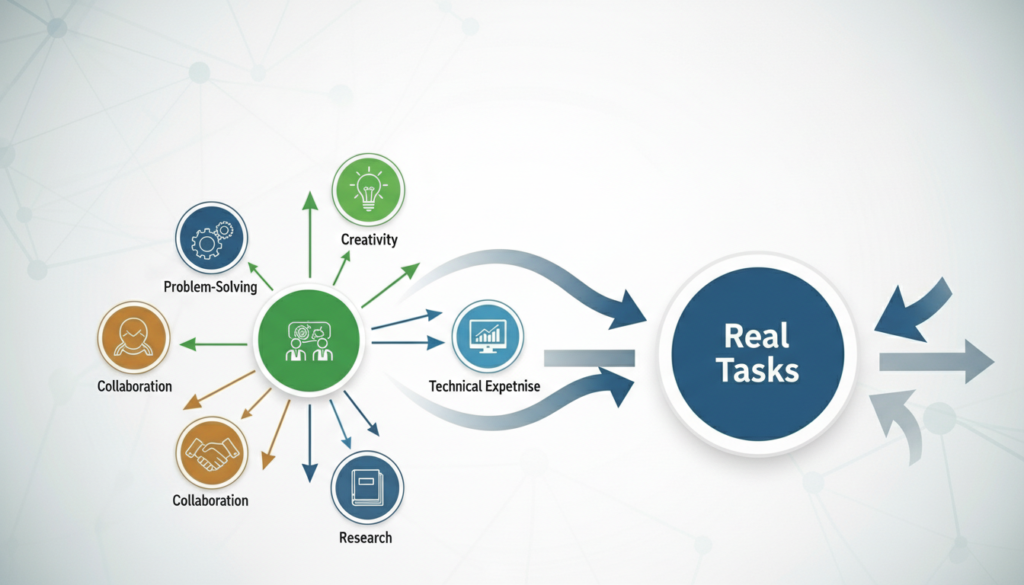
These skills work together in real tasks by helping evaluators analyse content accurately, apply clear judgement, and follow strict guidelines at the same time. Research skills support fact-checking, while analytical thinking ensures consistency and fairness in decisions. Strong attention to detail and communication tie everything together, allowing tasks to be completed efficiently and to a high quality standard.
Example workflow:
- Identify search intent
- Compare multiple results analytically
- Apply guideline definitions
- Assess language clarity and credibility
- Notice small quality signals before final rating
The evaluator’s role is to combine judgement with structure, not rely on instinct alone.
How to Improve These Skills Before Applying

Before applying, focus on building these skills through consistent practice and real-world exposure. Take short courses, work on small projects, and analyse real search results to understand how evaluation guidelines are applied. Regular practice with sample tasks will help you gain confidence, accuracy, and speed in decision making. Practical steps include:
- Analysing real search results manually
- Comparing top ranking pages for the same query
- Practising intent identification
- Reviewing content quality critically
- Reading evaluation-style documentation carefully
Many beginners fail not because they lack intelligence, but because they underestimate the importance of discipline and consistency. If you’re starting from scratch, our step-by-step guide to becoming a remote evaluator with no experience is a good starting point.
Why These Skills Matter Long Term
These skills matter long term because they help professionals stay relevant as search engines and AI systems continue to evolve. They build a strong foundation for consistent performance, adaptability, and career growth rather than short-term results. Over time, these skills also increase trust, accuracy, and decision-making quality, which are essential for success in evaluation and quality focused roles. The same skills apply to:
- AI content evaluation
- Data quality assessment
- Trust and safety roles
Building these skills opens doors beyond entry level evaluator work.
At Remote Online Evaluator, we regularly analyse evaluator job requirements and task patterns to help beginners understand what companies actually expect, not just what job listings say.
Conclusion
Search Engine Evaluator roles may look simple on the surface, but the skills behind them are highly specialised. From analytical thinking and attention to detail to guideline interpretation and quality judgement, these roles demand a balance of human insight and technical awareness. Companies rely on evaluators to bridge the gap between algorithms and real user experience, making these skills essential across every job description in this field.
If you’re planning to build a long-term career in search quality evaluation, mastering these core skills is non negotiable. At Remote Online Evaluator, we consistently see that candidates who focus on developing these fundamentals perform better in qualification exams, maintain higher task accuracy, and secure more stable project opportunities. Strengthening these skills not only improves your acceptance rate but also positions you as a reliable evaluator in a highly competitive space.
FAQs
1.What skills do search engine evaluator companies look for the most?
Companies prioritise analytical thinking, attention to detail, strong guideline comprehension, and the ability to judge content quality from a user’s perspective. These skills help ensure consistent and accurate evaluations.
2.Do I need technical or coding skills to become a search engine evaluator?
No coding knowledge is required. However, basic digital literacy, search behaviour awareness, and comfort using online tools are essential.
3.Can these skills be learned, or are they natural abilities?
Most of these skills can be developed with practice. Reviewing guidelines, analysing real search results, and learning from feedback significantly improves performance over time.
4.Why do job descriptions across companies list similar skills?
Because search quality standards are universal. Whether it’s Google-based tasks or third-party platforms, the core evaluation principles remain the same.
5.How can Remote Online Evaluator help beginners develop these skills?
Remote Online Evaluator provides guidance, role insights, and practical learning resources that help new evaluators understand expectations and prepare for real-world tasks confidently.